Sudan: A Silent Emergency
More than 17 million children need urgent life-saving help. Donate Now.
Sudan is the world's largest humanitarian crisis, but it's not making headlines. The scale of hunger, violence, disease and displacement is like nowhere else on earth - give now to bring much needed support to children and families.
Loading donation form...
What's the situation like for children in Sudan?
In April 2023, conflict in Sudan escalated into a full civil war. Three years on and the humanitarian crisis in the country continues to deepen, with children paying the highest price. More than 17 million kids now need humanitarian assistance - an increase of more than 20% compared with last year.
Despite the scale of suffering, Sudan remains one of the world's most overlooked emergencies.
Ongoing violence has forced millions of children to flee their homes, creating the world's largest child displacement crisis. Many have fled multiple times, carrying the trauma of violence, loss and uncertainty with them - every day is a struggle to survive.
Even before the conflict, children in Sudan faced immense challenges, including disease outbreaks, limited access to clean water and one of the highest rates of child malnutrition in the world. Today, those vulnerabilities have been pushed to catastrophic levels.
Routine immunisation rates have fallen sharply, leaving children vulnerable to preventable diseases such as measles and malaria. At the same time, limited access to safe water and sanitation has fuelled the spread of deadly waterborne diseases, including cholera and diarrhoea. Hunger is worsening and the risk of famine is real for nearly 19.5 million people facing acute food insecurity.
When a crisis like this disappears from the news - it doesn't disappear for the families living through it.
Children's education has also been shattered. Before the conflict, 1 in 3 kids was out of school, today, despite some schools reopening, millions of children remain without access to learning. Every missed day of education puts them at greater risk of exploitation, child labour, child marriage and recruitment by armed groups, while diminishing their hopes for a brighter future.
Sudan is the world's largest humanitarian crisis. Unless the violence ends and humanitarian access is sustained, the needs will continue to grow, pushing more families deeper into desperation and placing millions more children's lives at risk.
Sudan cannot remain a silent emergency.
Make a donation today to show kids in Sudan they've not been forgotten.
This is how your donation will have an impact
HEALTH
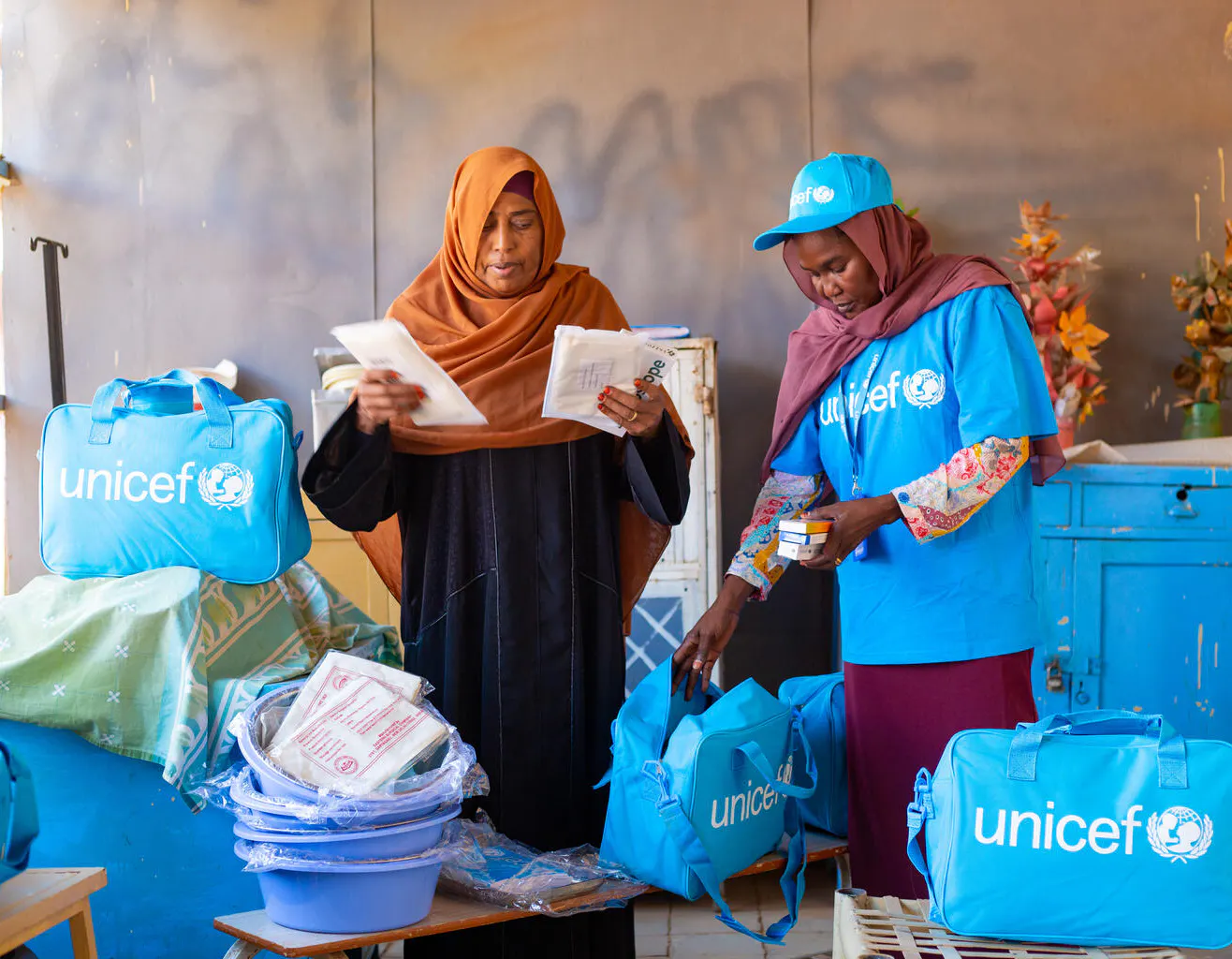
UNICEF midwifery kits are being prepared for delivery to midwives from Madani Midwifery School, so they can support maternal and newborn health during emergencies.
About 330,000 children will be born during the ongoing crisis in Sudan. Without skilled care from health professionals including midwives before, during and after childbirth, their lives and the mothers are at risk. For decades, health kits delivered by UNICEF have been helping to save the lives of mothers and newborns around the world.
The UNICEF Midwifery Kit was designed to improve maternal and neonatal care in situations of development and emergency. It consists of basic drugs, renewable medical supplies, medical equipment and basic sterilization and resuscitation equipment for health facilities to perform an average of 50 normal deliveries.So far in 2026, UNICEF has supported primary health care for almost 1 million children and women.
Please donate now to ensure we can provide ongoing health care to children and families.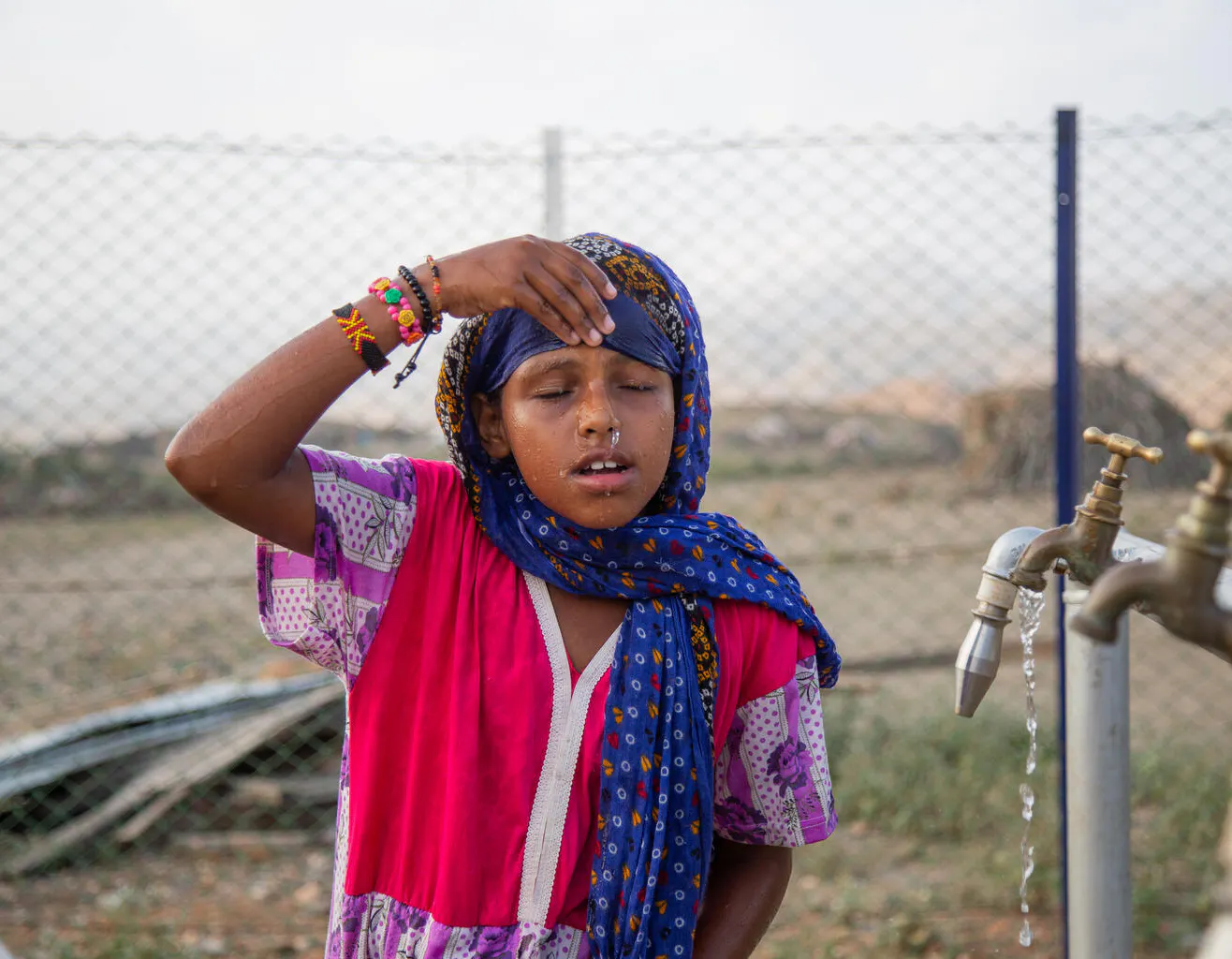
CLEAN WATER
7-year-old Madina collects water from a tap newly installed by UNICEF.
Previously Madina and her family struggled to access clean water. The existing water pumps often dried up and the only other water source was a creek that was shared with animals. The water was unclean and contaminated.“Before, we used to bring the water from a creek. I used to bring water three times a day and the water wasn’t good,” Madina said.
UNICEF has constructed a solar powered water system that supplies clean and safe water for her community. This will mean less time spent collecting unsafe water and less chance of sick from waterborne disease.
So far in 2026, UNICEF has provided 5.1 million people with clean water for drinking, cooking and personal hygiene.
Please donate now to help provide clean water to children and families in Sudan.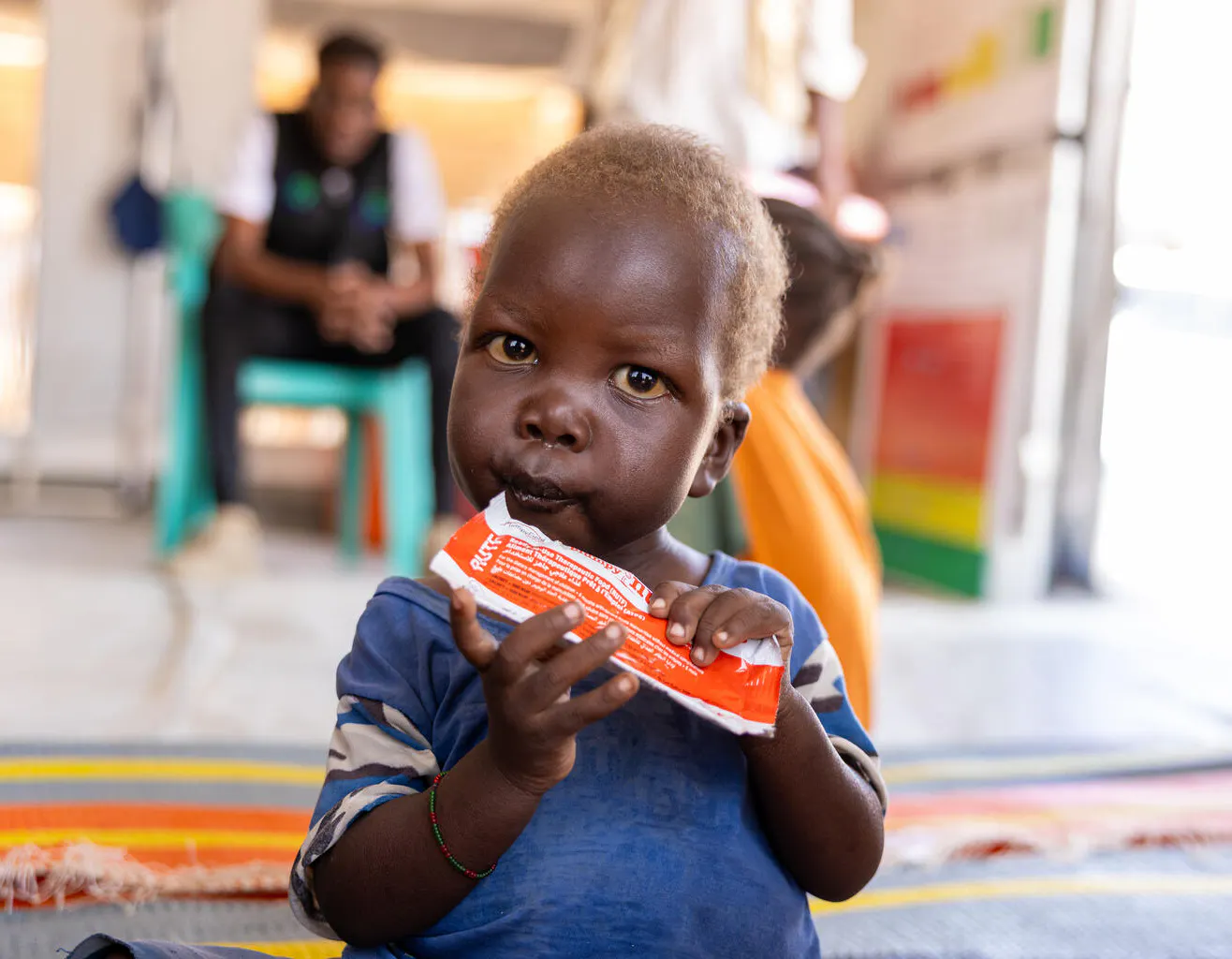
NUTRITION
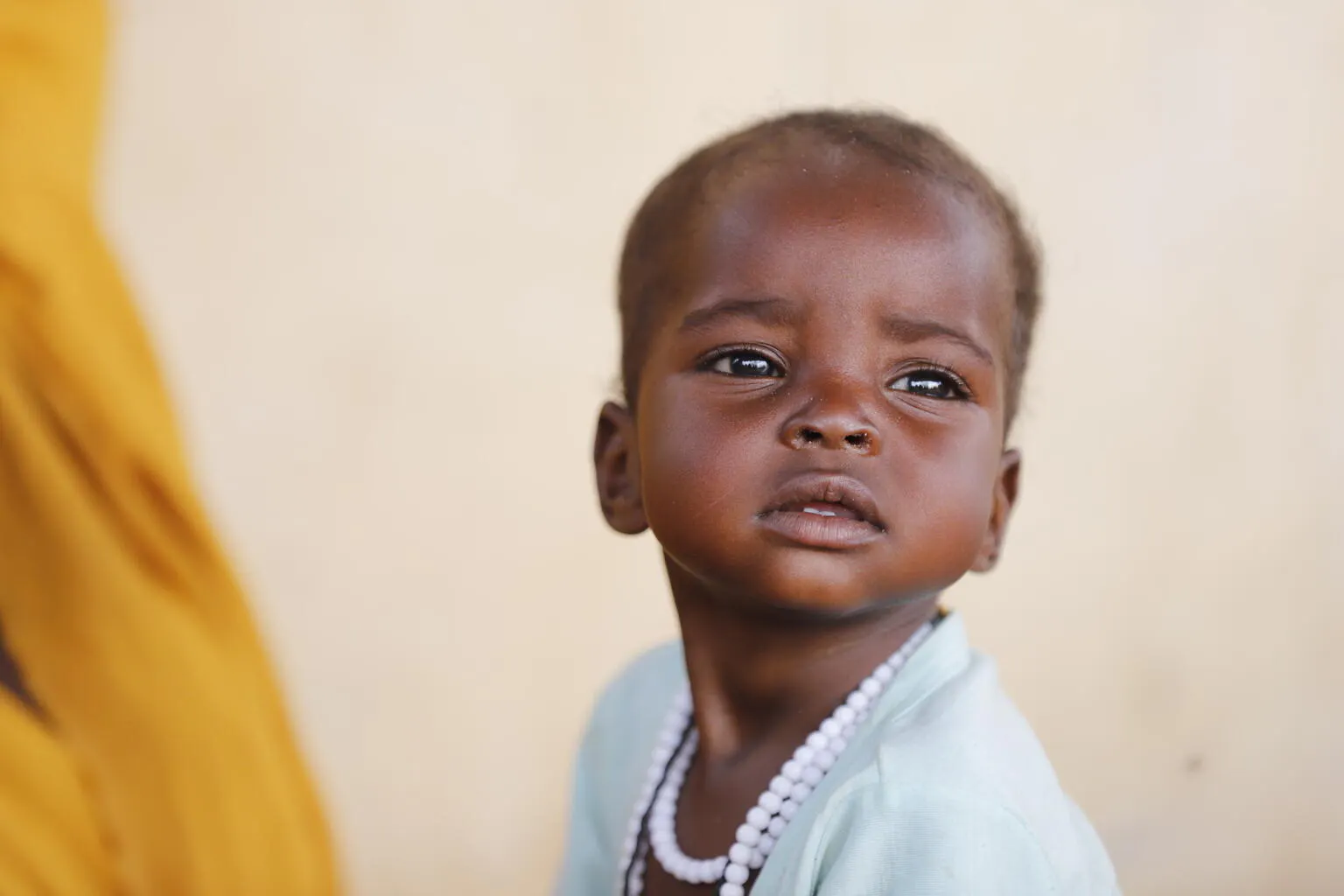
Mujahid (20-months) munches on a packet of ready-to-use-therapeutic food (RUTF) to treat his malnutrition.
Two months ago, he and his mother Aziza arrived at the Goz Alsalam Internally Displaced Persons site after fleeing their home in Kordofan. Mujahid was severely malnourished after suffering from severe bouts of vomiting and diarrhoea that began during the journey.
“He didn’t eat much when we arrived,” Aziza said, “He would just cry, but his appetite is now increasing.”
Mujahid was identified by UNICEF as needing urgent treatment for malnutrition and is slowly recovering.UNICEF estimates 825,000 children will suffer from severe acute malnutrition in 2026, a 7% increase compared to 2025, and 25% higher than before the conflict.
So far in 2026, we've screened 5.3 million children for acute malnutrition, and treated 174,737 children with severe acute malnutrition.
Please donate now to support hungry children in Sudan.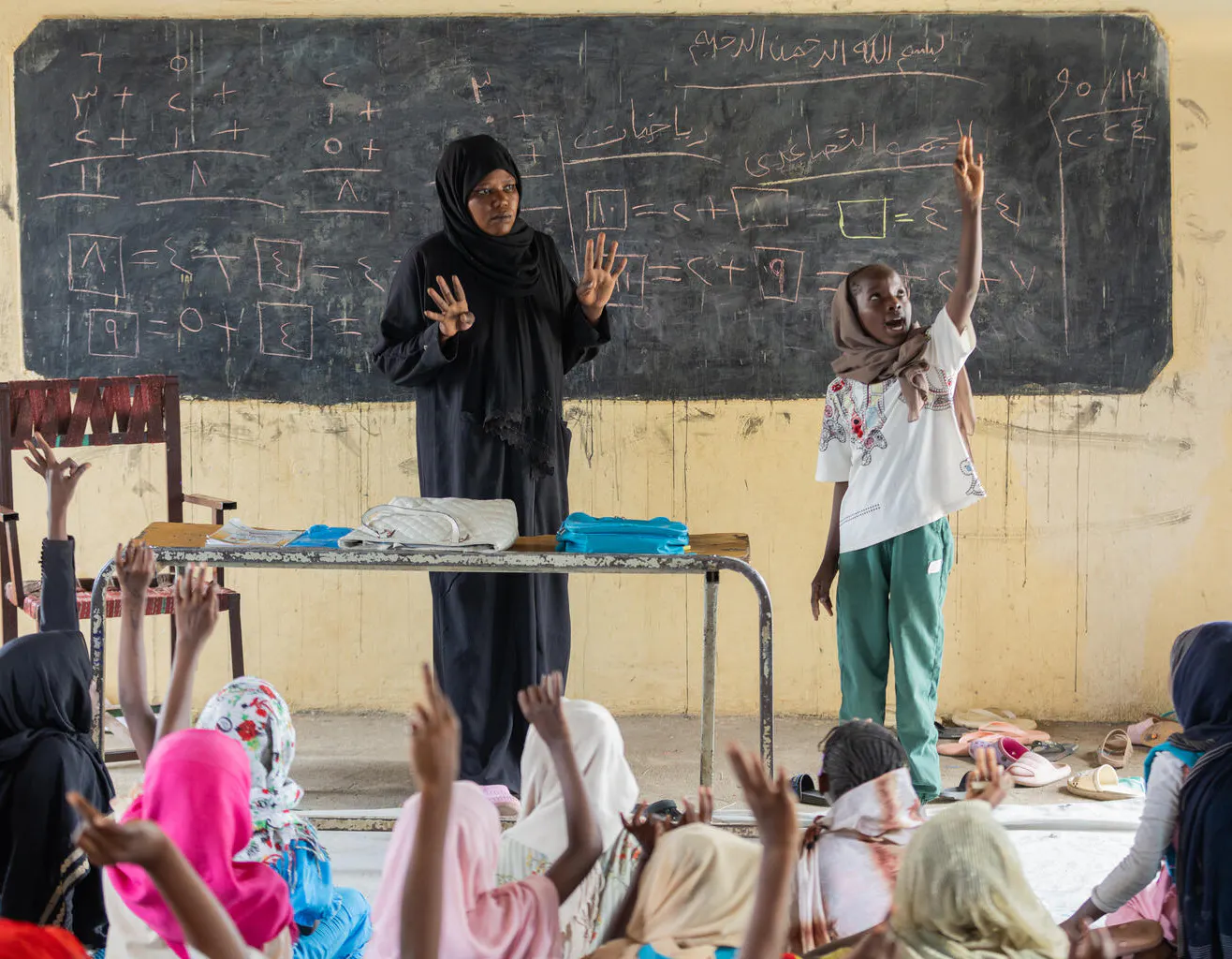
EDUCATION
11-year-old Rabha stands at the front of the class, at a UNICEF-supported safe learning space in Gedaref, Sudan. She counts from one to ten in English as the rest of the class repeats after her.
At this safe space, Rabha has had several firsts. After being displaced from Khartoum, she is attending formal school for the first time. After only a few months, Rabha can read, write, and count. It is here that she also received her first school bag and books, thanks to UNICEF.
Over 300 children come to this safe space daily to engage in various activities, including play, theatre, clubs, art and drawing as well as structured learning with support from trained facilitators, volunteers, and teachers.
UNICEF is supporting 1.4 million children like Rabha to receive formal or non-formal education. We've also provided learning materials, such as school bags, notebooks, pencils and maths sets, to more than 183,000 children.
Please donate now to support children's ongoing education in Sudan.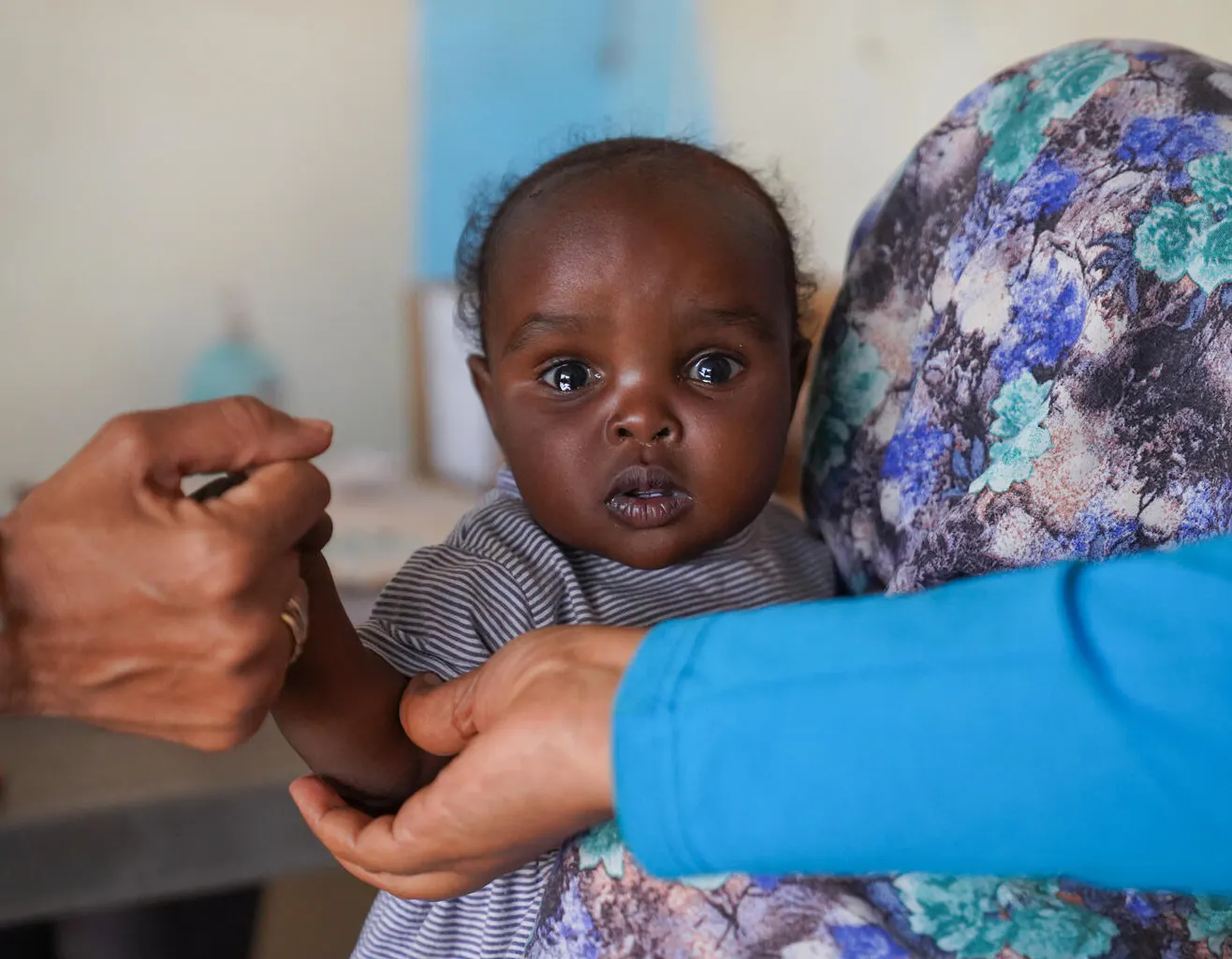
VACCINES
Elaf is 7-months old and being vaccinated against measles, which can be deadly for young kids like her.
On 18 January, Madina brought her seven-month-old daughter, to a UNICEF-supported health facility in Tawila, North Darfur. This was the last day of a measles campaign targeted at protecting 6 million children in Darfur, Sudan.
In 2025, UNICEF provided 70 million vaccines doses to Sudan, 20 million of them were delivered to Darfur. We provide both routine and emergency vaccines to protect against diseases such as polio, measles/rubella, cholera, malaria, and diphtheria-tetanus-pertussis (DTP).
UNICEF is the world's largest provider of vaccines, we protect almost half the world's children.
Please donate now to help protect kids against vaccine preventable diseases.
Sudan Emergency FAQs
Children in Sudan have lost so much
WE CAN'T STAY SILENT
Millions of kids are at risk every day - your donation can bring hope and life-saving care.
Drone attack on Sudan market kills and injures children
A drone attack on a market in Ar Rahad, North Kordofan, yesterday, reportedly killed at least two children and injured six others, aged between six and 14. This latest attack is a stark reminder of the deadly toll the conflict continues to have on children across Sudan. Markets are places where families gather to buy food, earn a living and meet basic needs. They should never become places of death and devastation.
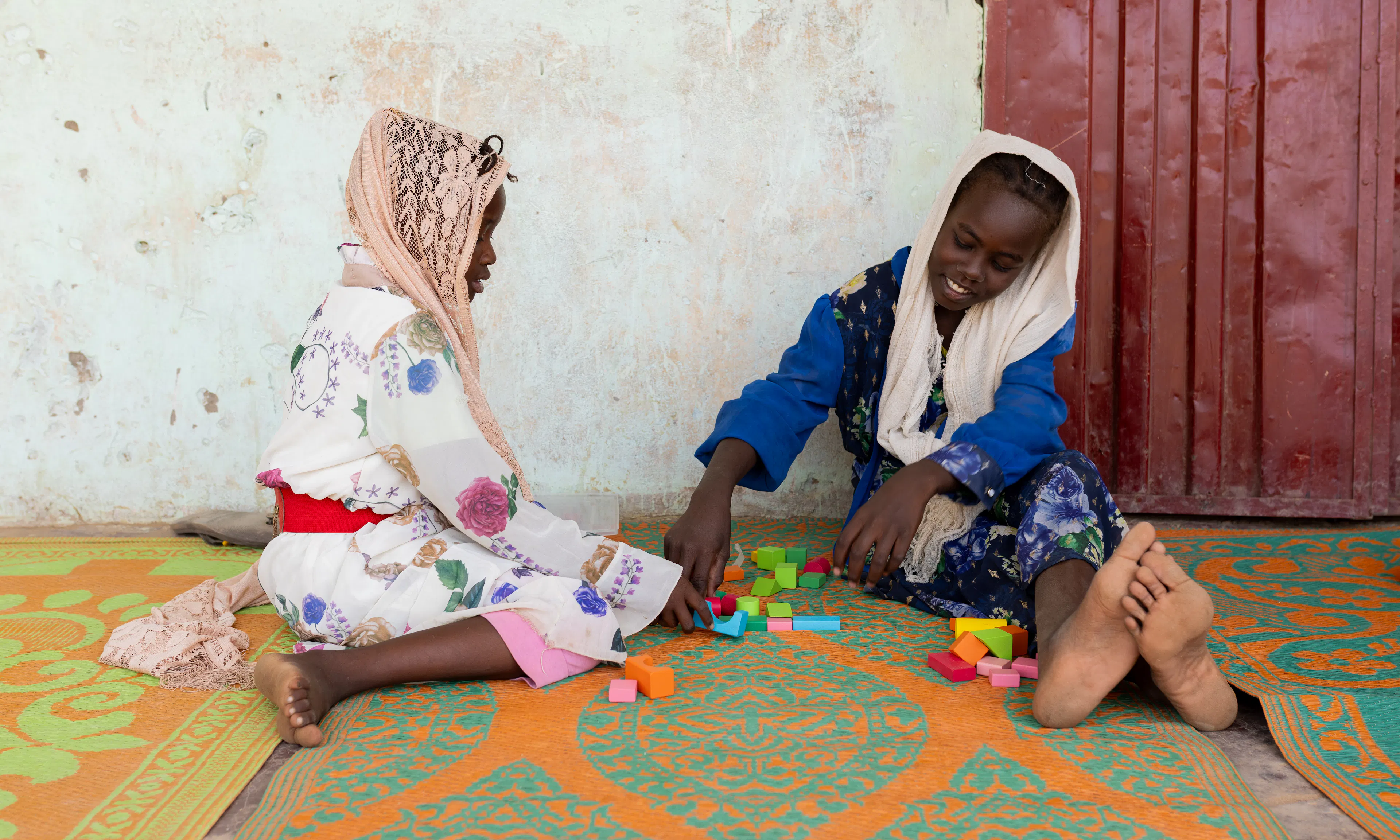
“Sudan is the world’s largest humanitarian crisis - and children are paying the highest price”
This is a summary of what was said by UNICEF Deputy Executive Director Ted Chaiban – to whom quoted text may be attributed - at today's press briefing
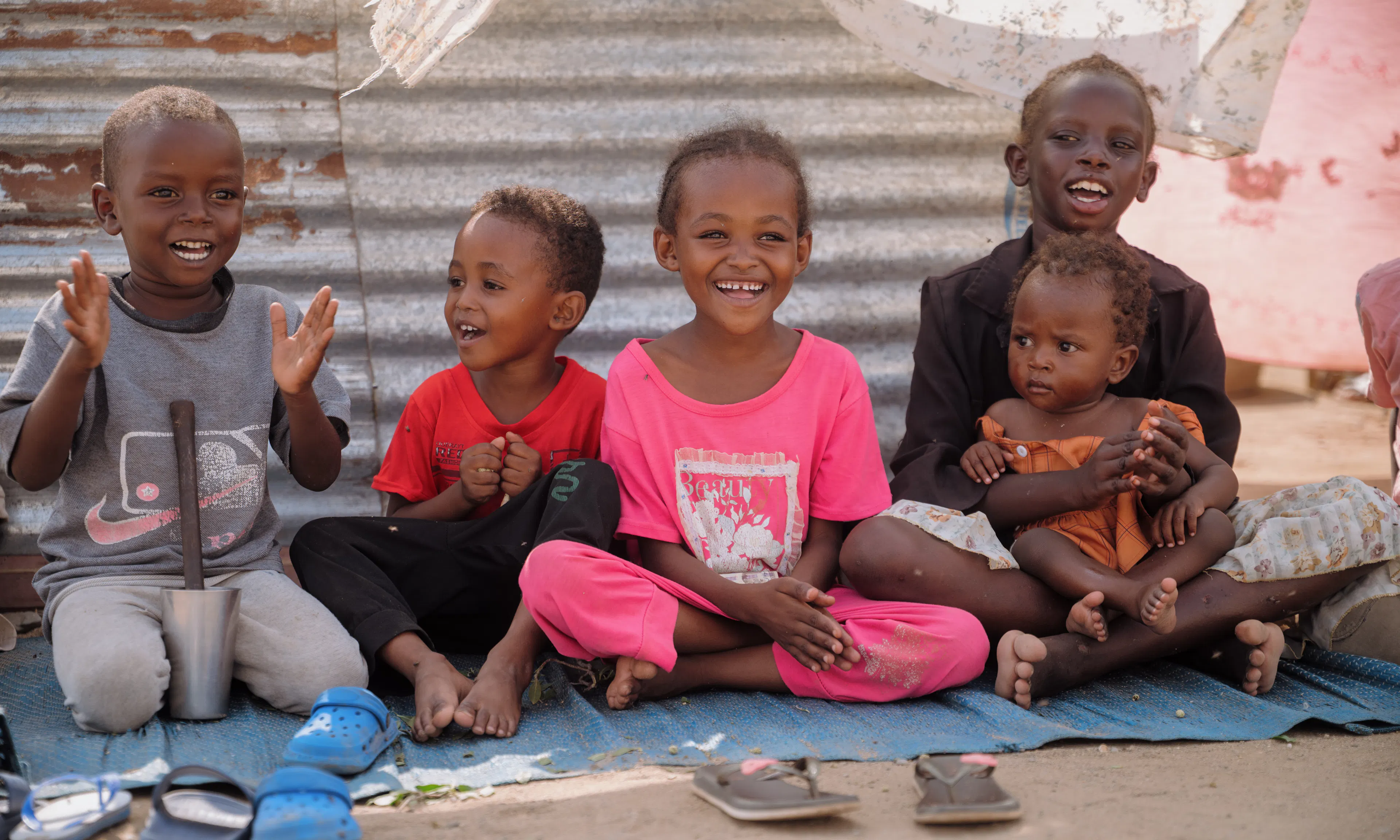
UNICEF Executive Director warns of deepening protection crisis in Sudan as violence and displacement intensify
In Sudan, UNICEF’s Catherine Russell urged global action for children facing the world’s worst displacement crisis, rising hunger, and horrific violence.
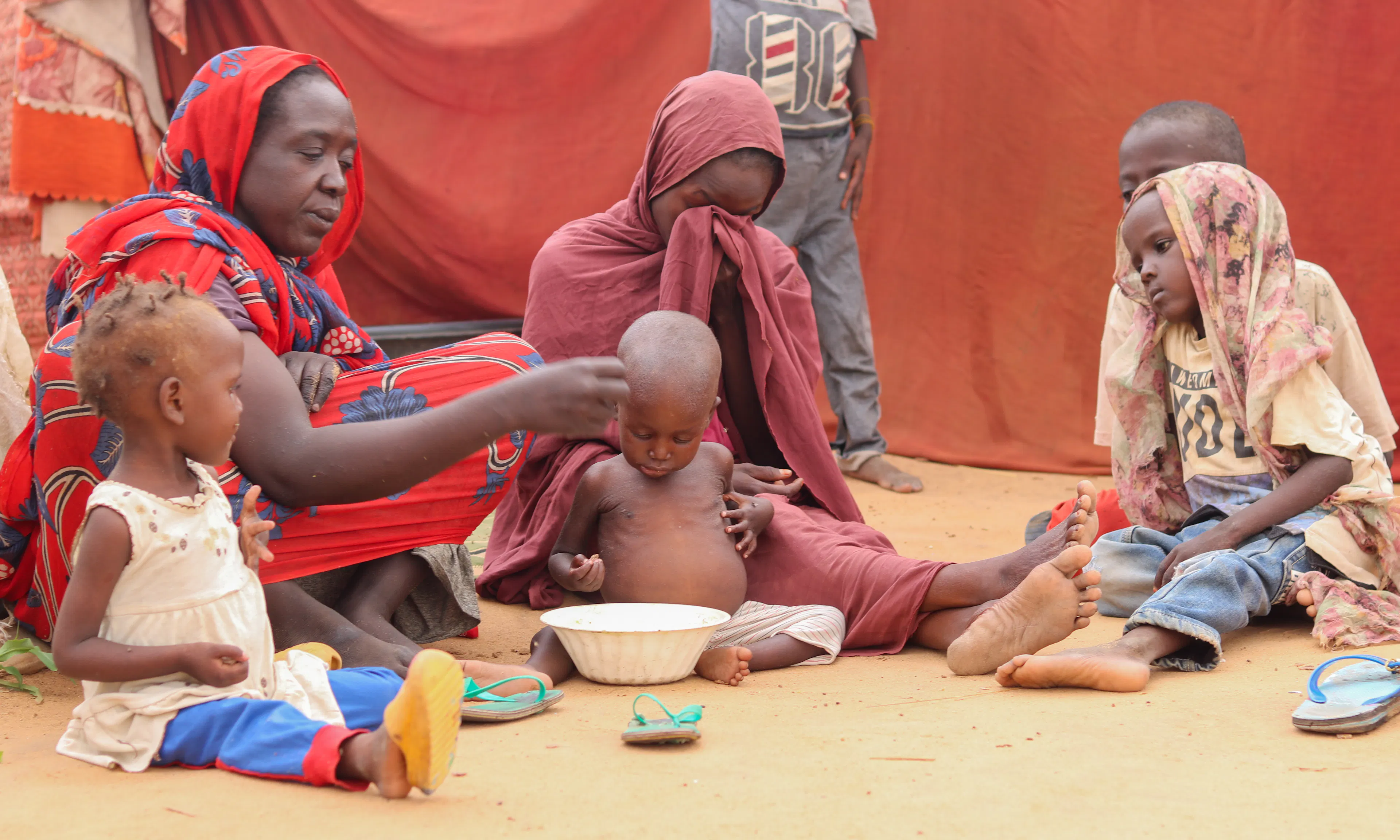
After 500 days under siege, children in Sudan’s Al Fasher face starvation, mass displacement, and deadly violence
After 500 days under siege, the city of Al Fasher in Sudan’s North Darfur has become an epicentre of child suffering, with malnutrition, disease, and violence claiming young lives daily, UNICEF warned today.
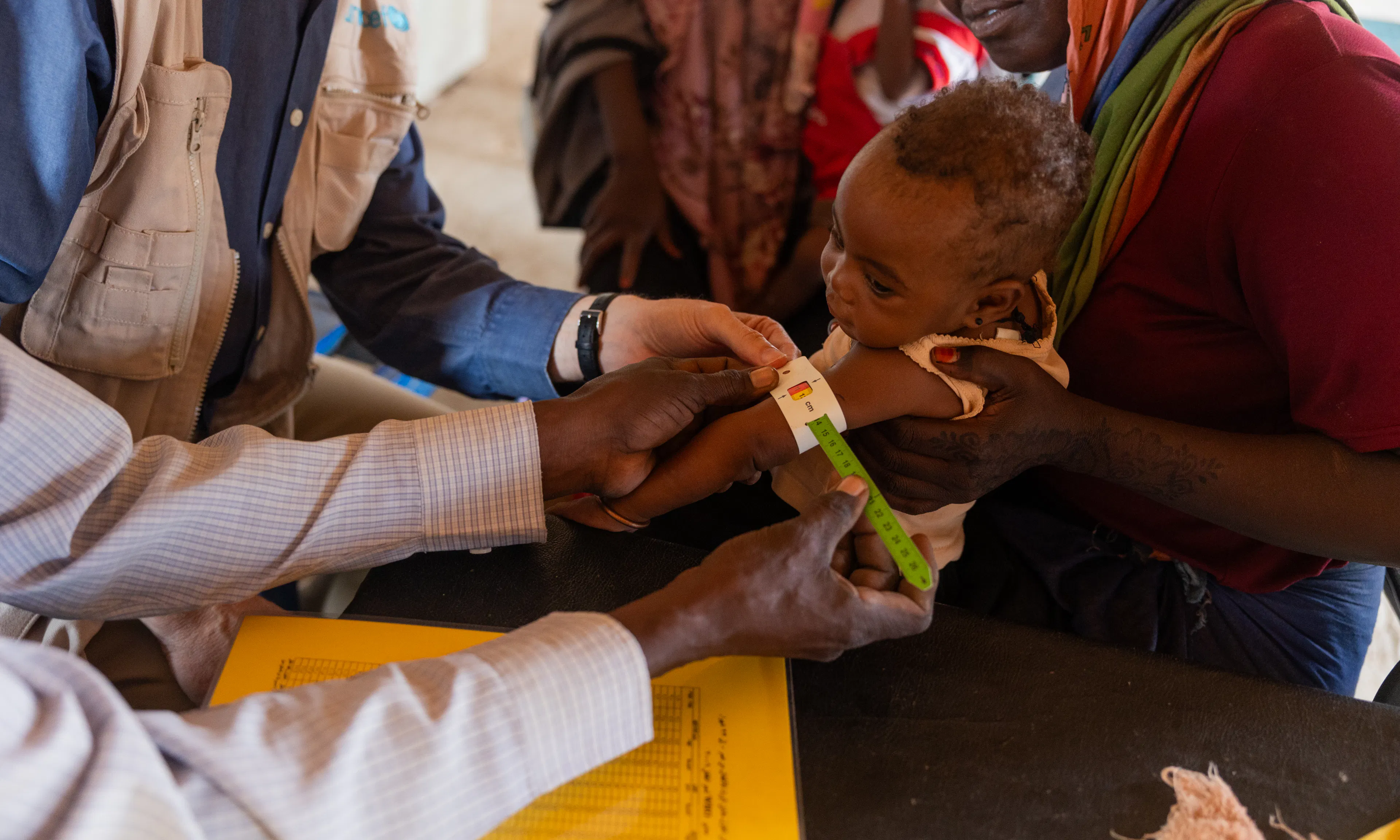
Children in Sudan ‘reduced to skin and bones’ as UNICEF calls for urgent action
On 3 August, the UNICEF Representative Sheldon Yett observes children receiving nutrition services and care at Mayo Mandela clinic in Jebel Awlia, Sudan.
Donate to this appeal
SSL protected donation