Restoring Childhood
in Solomon Islands
On 7th April 2026, Tropical Cyclone Maila reached peak intensity in the Solomon Islands with catastrophic force. Rapidly intensifying from a Category 4 to a Category 5 system, the cyclone left a trail of destruction across Western, Choiseul, and Isabel Provinces, as the most powerful tropical cyclone to have ever affected those provinces.
Entire communities were battered, 161 communities impacted, livelihoods destroyed, and families are now struggling to recover in the aftermath of one of the most powerful storms to strike the country. Homes were flattened. 84 schools were affected. 21 health care facilities were affected.
For thousands of children, daily life was suddenly disrupted. Across the affected provinces, an estimated 150,000 people, including 67,000 children, are now exposed to heightened humanitarian risks.
UNICEF is supporting the government response in Western and Choiseul Provinces to reach those families and children most in need.
Where homes once stood
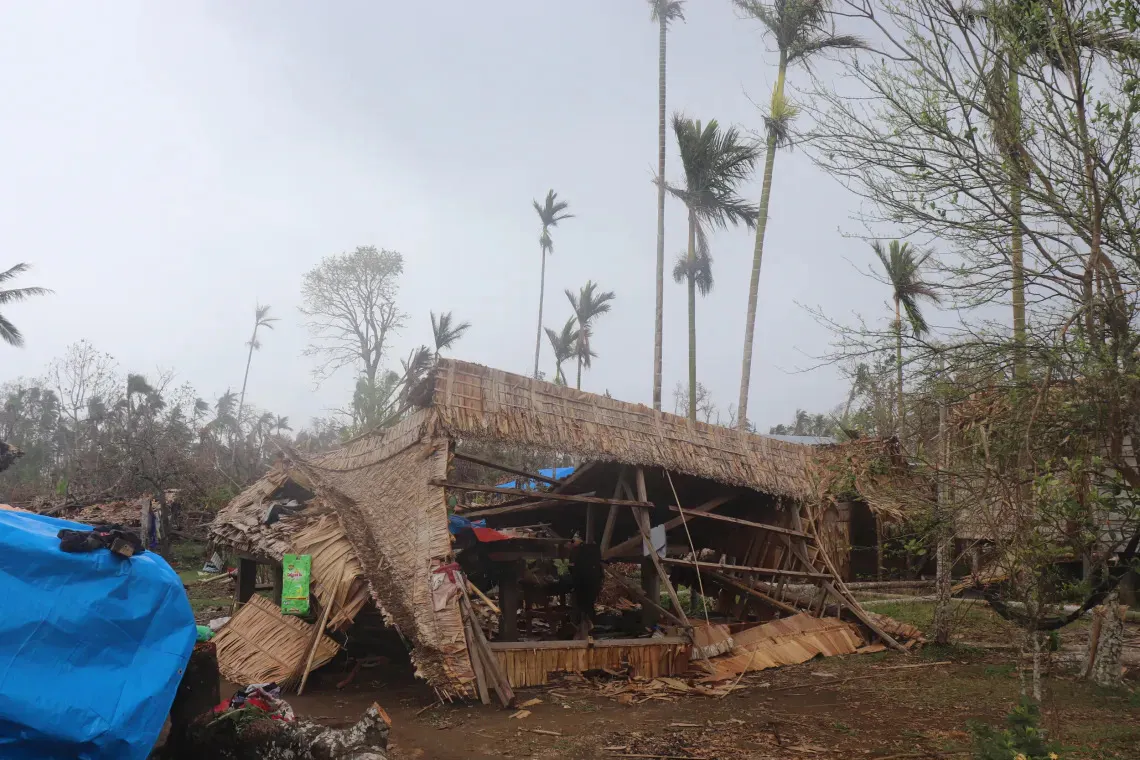
In Nusa Simbo, Western Province, the destruction is immediate and visible.
Entire houses have been reduced to debris. Roofs are gone. Walls lie scattered across the ground. What remains are the outlines of homes and the memories they once held.
For families here, rebuilding is not just about structures, it is about starting again.
Health services under strain
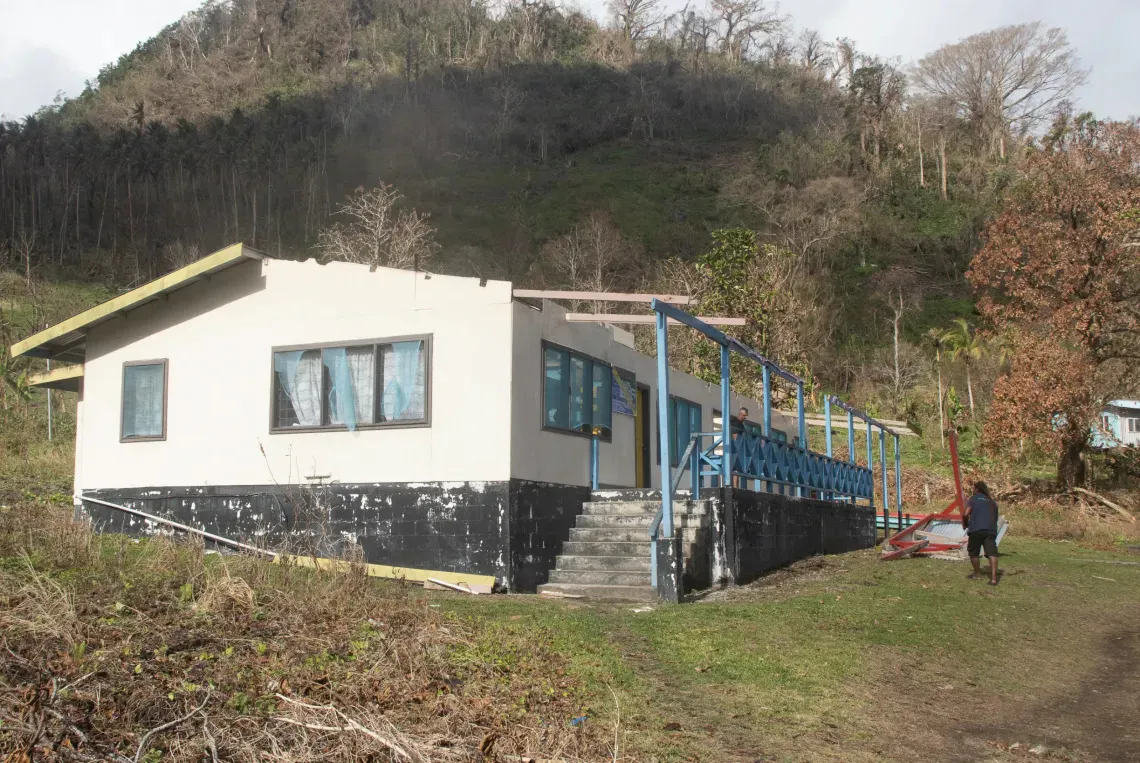
At Lengana, the local Tumbi Rural Health Centre tells a stark story.
Roofs ripped away. Medical supplies soaked and ruined. Life‑saving equipment left exposed.
Across the affected areas, health facilities have been damaged or forced to operate with bare essentials—cutting off basic care for thousands of women and children.
Yet even now, health workers refuse to stop. They are reaching patients wherever they can, determined to keep care going.
Children learning uncertainty
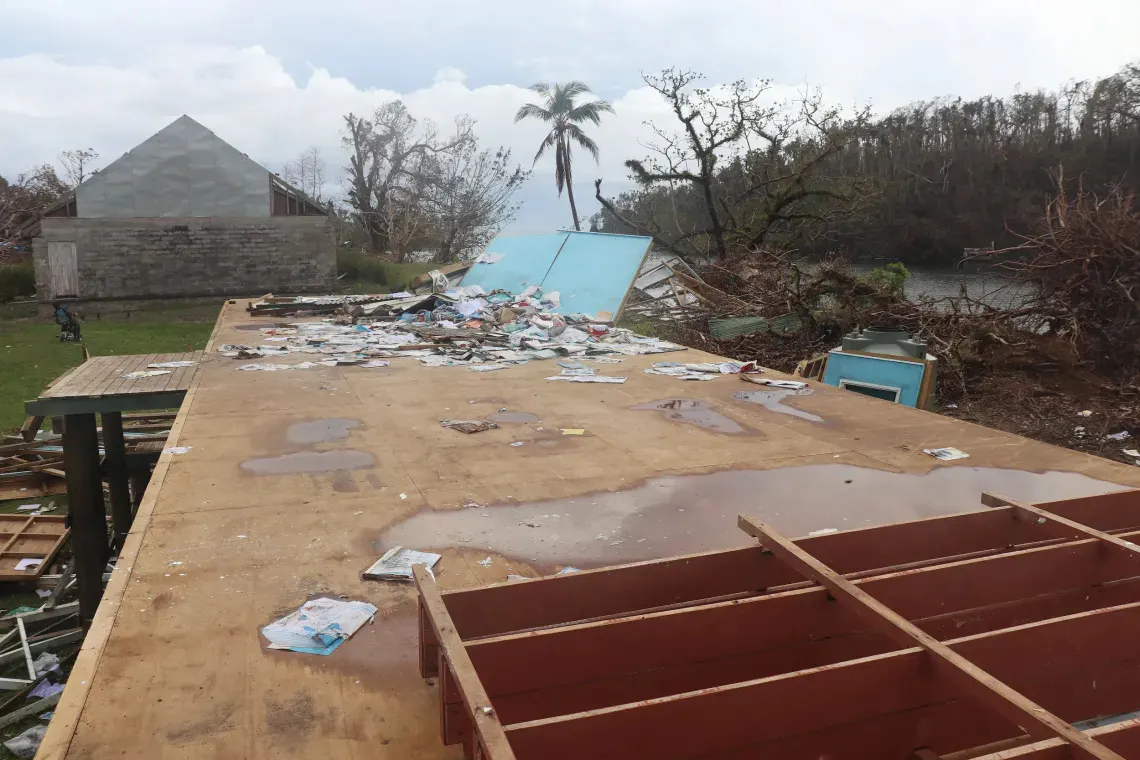
At Nusa Simbo Primary School, the impact on education is clear.
Classroom roofs have been blown away. Books and learning materials lie scattered across floors. Weeks after the cyclone, many schools remain closed.
For children, the disruption goes beyond education—it affects their sense of normalcy and safety.
Across the three affected provinces, dozens of schools have been damaged, affecting thousands of students.
Water: a growing concern
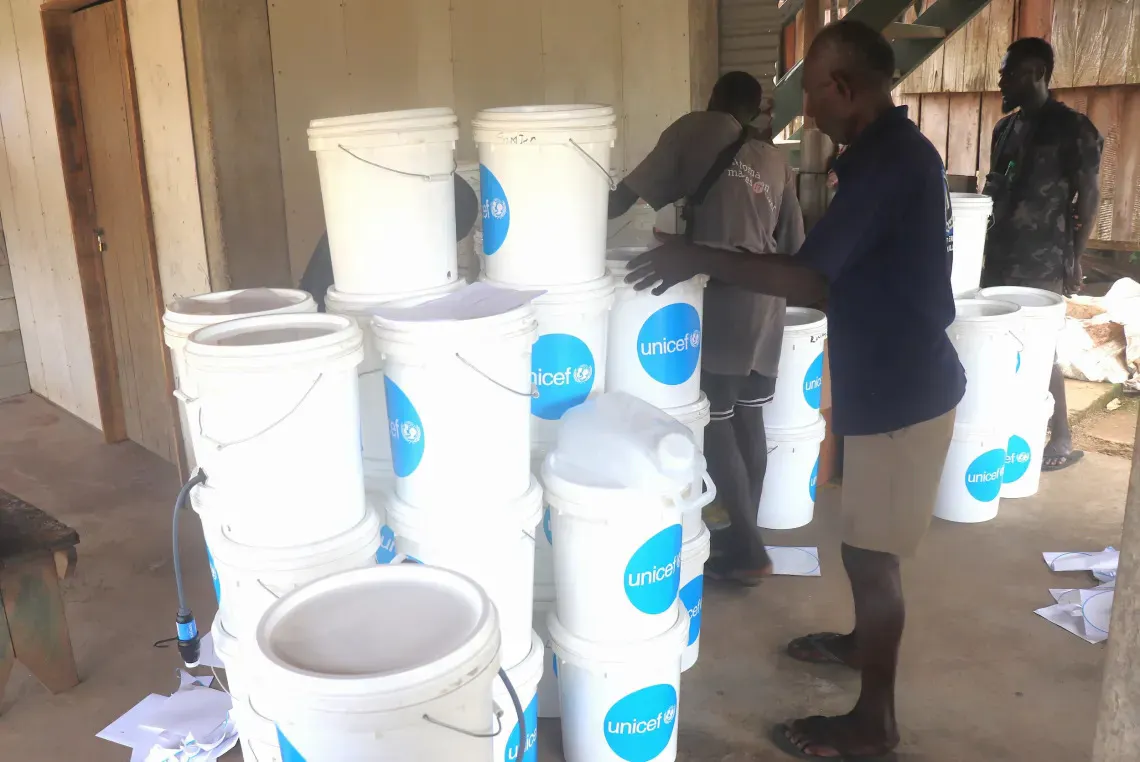
With water systems damaged, safe drinking water has become scarce.
In Simbo, families now rely heavily on rainwater. At the same time, cases of diarrhoea are beginning to emerge—an early warning of potential outbreaks. Out of the 54 water points in Simbo Island, 39 have been damaged by the cyclone.
UNICEF and partners are supporting communities with water filtration buckets and hygiene promotion, helping families access clean water and reduce the risk of disease.
Food insecurity and rising malnutrition risks
For many families, food is running out. Malnutrition risks are rising.
For many families, food gardens, their main source of nutrition—have been destroyed. Mothers describe cassava crops rotting underground, lost when the cyclone struck with no time to prepare. Precious food supplies were washed away.
Young children are now the most vulnerable.
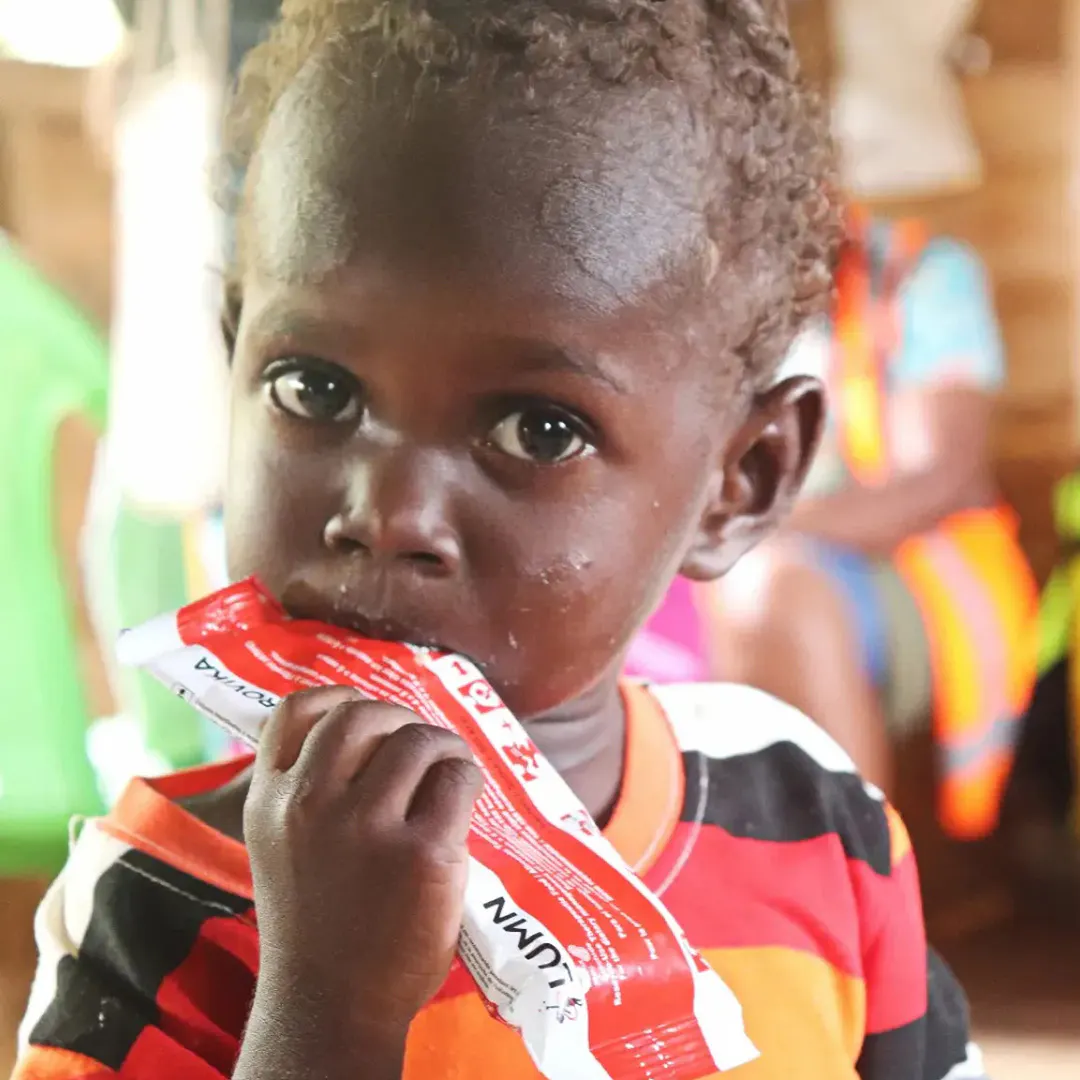
3 year old Douglas feeds on the life‑saving therapeutic food—critical support for children at risk of malnutrition. Nearby, children quietly eat micronutrient powders, small packets that have become vital lifelines in the absence of regular meals.
UNICEF is supporting Government medical response teams with essential nutrition supplies to help children survive and recover.
A Landscape Stripped Bare
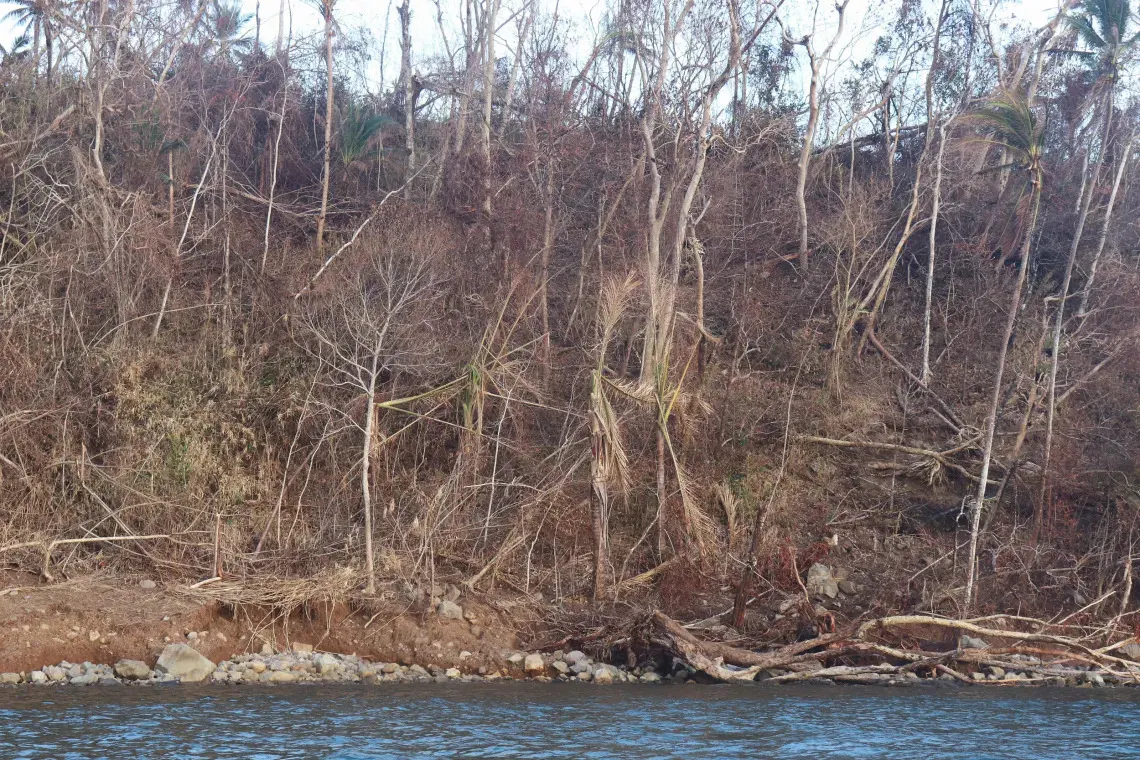
Tropical Cyclone Maila left more than damaged homes on Simbo Island—it tore through the land itself. Hillsides once covered in green now stand dry and exposed, with trees uprooted and vegetation lost.
For communities, this is not just environmental damage. Sago leaves, essential for roofing and walls, have been wiped out. Leaders say it could take years before these materials return, slowing recovery for families already rebuilding. The storm has passed, but its impact remains—etched into the land and the long road ahead.
Working together to
rebuild learning spaces
In Choiseul Province, classrooms were destroyed, routines were broken, and safe spaces for children destroyed. For many families, recovery meant rebuilding shelter. But for children, the loss of learning and protection left a quieter, deeper impact.
On the ground, recovery is a shared effort.
UNICEF staff and partners worked together under the heat of the sun, assembling tent tarpaulin materials piece by piece to erect a temporary learning space for children.

Restoring safety
UNICEF staff and partners work together under the heat of the sun to assemble a temporary learning space in Choiseul Province after Tropical Cyclone Maila destroyed classrooms and disrupted learning for children.
Across affected communities, these emergency spaces are helping restore education, protection and a sense of normalcy for children recovering from the cyclone.
The healing begins
In Saqigae, South Choiseul, one of the hardest-hit communities, UNICEF and Save the Children began by listening.
Children gathered quietly inside a community space, sharing their experiences in the days after the cyclone.
Across affected provinces, UNICEF has supported emergency education for more than 1,300 children and provided essential supplies to help restore basic services.
A learning space rises again
Soon, the structure stands complete.
White canvas walls rise against the landscape, marked with the UNICEF logo, —a sign that support has arrived, and that children will have a place to learn again.
As final touches are made, children help UNICEF Child Protection Officer, Sonya with the final touches.
For many, this is the first sign that normal life may slowly return.
Back to learning, back to routine
Inside the temporary learning space, children sit together on the floor.
Some are quiet. Others begin to engage. Slowly, the space fills with movement, voices and the familiar rhythm of learning.
Beyond education, these spaces also provide emotional support. Through sessions delivered by community facilitators and pikinini workers trained by Save the Children with technical support from UNICEF, children receive psychological first aid, helping them process fear, loss and uncertainty.
Education Supplies for Learning Continuity
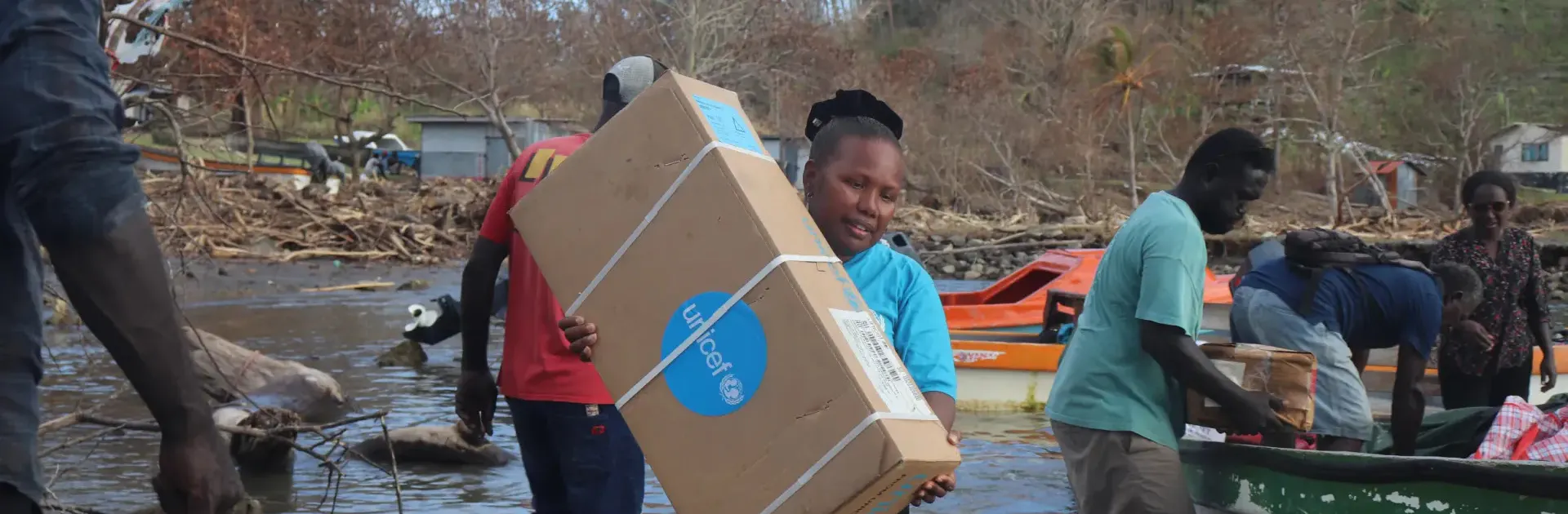
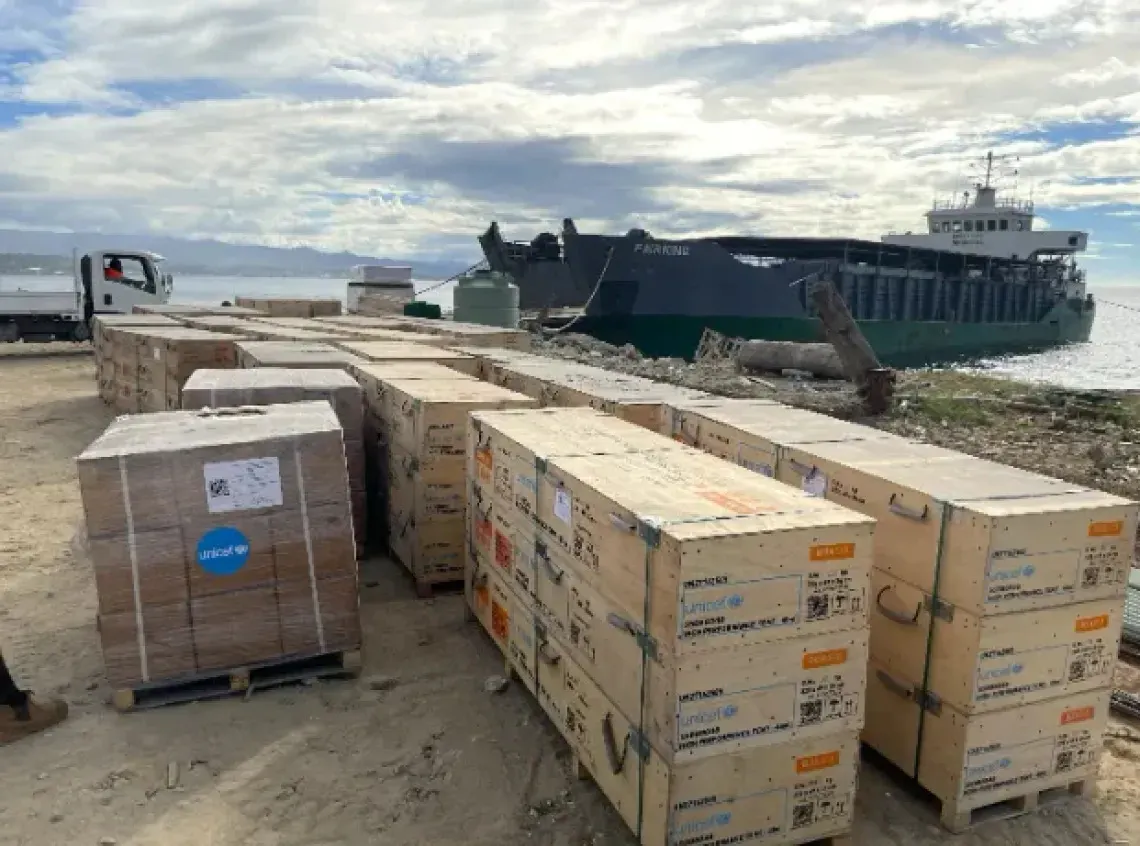
At Ranadi Harbour in Honiara, education supplies are being loaded onto the landing vessel Fair King, ready to support more children and families in Western Province with essential education supplies including temporary learning spaces, teaching materials and learning resources.
The shipment follows the widespread destruction of schools and disruption to learning caused by Category 5 Tropical Cyclone Maila, which affected 84 pre-primary, primary and secondary schools across Western and Choiseul Provinces. Working alongside the Solomon Islands Government, UNICEF is supporting efforts to help children safely return to learning and restore a sense of routine and stability during recovery.

Learn more about our work in the Pacific
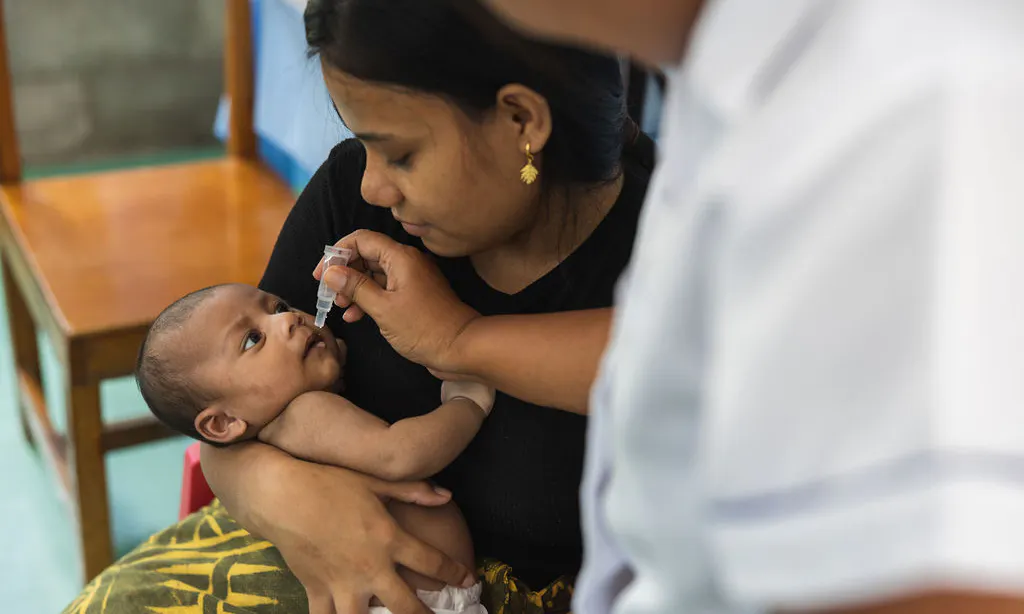
Pacific children get health boost with government immunisation commitments
Nine Pacific countries have committed to greater protection for children against life threatening diseases by adopting an immunisation program that has been implemented by UNICEF in collaboration with Ministries of Health and funding from Rotary since 2020.

New WASH Facility Restores Dignity and Learning for Honiara Senior High School Students
New WASH Facility Restores Dignity and Learning for Honiara Senior High School Students
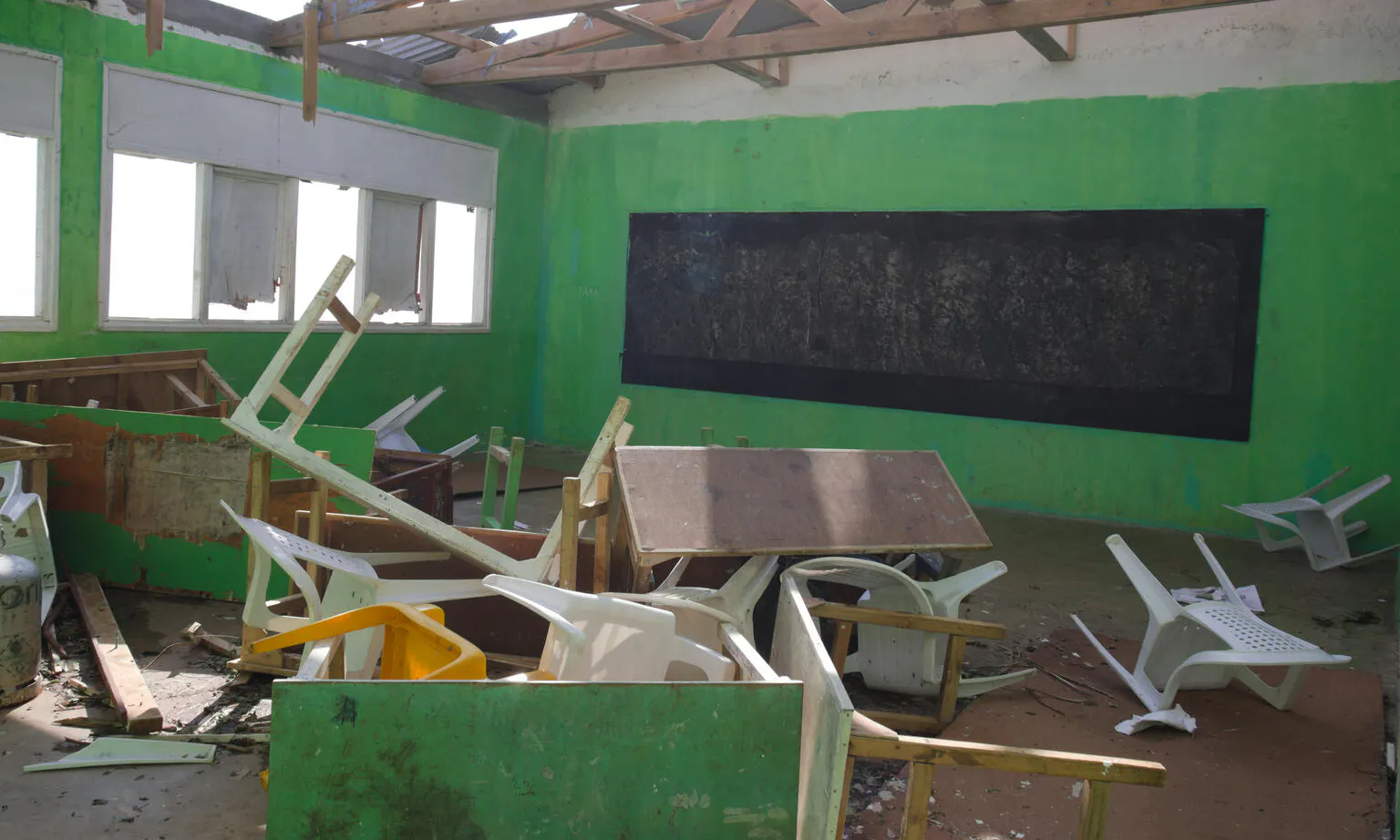
UNICEF concerned for children of the Pacific in the coming cyclone season
UNICEF is increasingly concerned for children’s wellbeing in the upcoming cyclone season. Following the recent out of season Tropical Cyclone Lola, many children have already experienced three Category 4 cyclones in 2023.