Feature articles
Education for Displaced Children in Eastern Chad
Djabal, Chad, October 2008UNICEF International
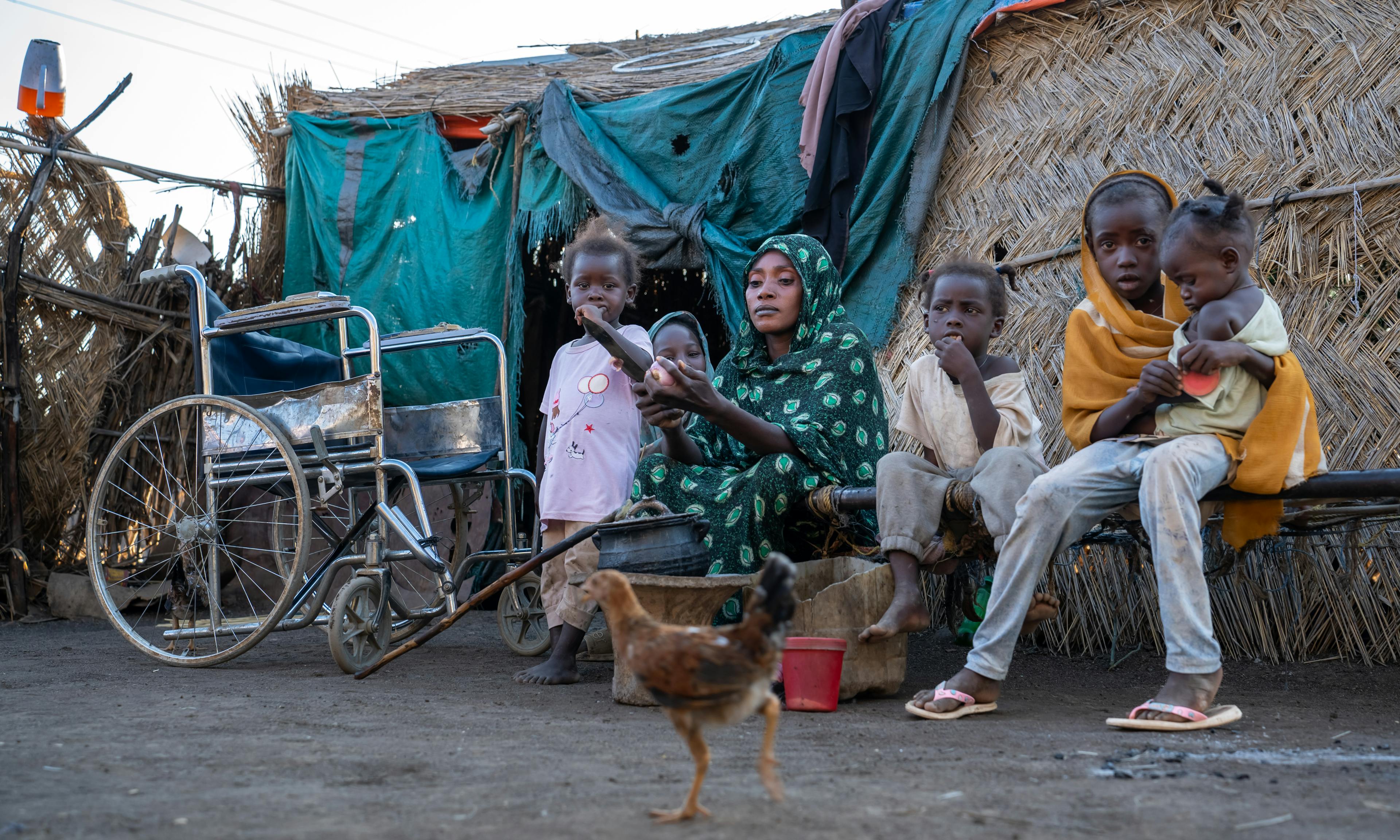
Manayar is 13 years old. For the past four years she has been living in Djabal refugee camp in Eastern Chad. UNICEF is funding a school there so that she can continue learning and fulful her dream of becoming a doctor.
Life as a student in a refugee camp is not easy. The daily routine for Manayar begins at 4am when she wakes to go to school. She prepares tea and 'la boule' - a traditional Chadian and Sudanese dish made of warm bread and sauce. She wakes up her two brothers to help them to get ready as well. After a quick sip of tea, she leaves to walk to class which begins at 7am.
Classes include mathematics, environmental education, geography and Arabic. During a break in the middle of the day, Manayar has a quick nap before helping her mother by fetching water. She does her homework before returning to class for a final hour between 6 and 7pm. During the summer holidays this school routine is replaced with farming chores and firewood collecting.
"I cannot imagine my life without school," Manayar says. "Studying opens my eyes and mind and is a path to the future."
Her grandmother, Mariam, cannot read or write, but is a good role model for Manayar as she works as a midwife in a clinic in the camp. Manayar's mother works there too, registering babies. Manayar would like to work freely in Sudan as a doctor when she is older. This hope is currently threatened because schools in the camps do not go beyond primary level. She hopes that in four years when she has completed eighth grade, she will be free to cross the border and attend school in the Sudanese capital, Khartoum. For now, she will persist with her busy daily routine in Djabal camp, making the most of the UNICEF funded education offered.
Thailand: Educating in the Hills
Mae Hong Song, Thailand, November 2008Nattha Keenapan, UNICEF International
As the morning mist begins to lift from the green hills, small groups of children can be seen descending the steep and muddy footpaths that lead to a tiny village in the highlands of Thailand's Mae Hong Song province.
Most of the children come from the small wood-and-bamboo homes that dot the hillsides and some have walked for kilometres, waking up well before dawn to start their journey. Their destination is a simple but solid three-room school house with rough plank floors, bamboo walls and a tin roof. The 20 children who attend school here are ethnic Karens, and for many of them the education they are receiving here may be the only opportunity they will ever have to learn in a structured school environment.
The hill tribe school project began after a UNICEF-supported survey in the district found that more than a thousand children of school age were not going to primary school. Parents were keeping children at home because existing schools were too far away so it was too hard for children to walk to and from them everyday. The Ministry of Education have worked with UNICEF to construct the schools. It was a challenge to build them in such remote areas, but the children and their parents are grateful that the effort was made.
The schools are different to most in Thailand; some teachers can speak the traditional ethnic languages, the students do not wear uniforms, children of different ages sometimes learn in the same class, they clean and cook for themselves. Some lessons would seem odd to people who do not live in Mae Hon Song such as learning how to take refuge in a bunker in case the military arrive in the area during the dry season. They are also taught how to use wisely and protect their natural environment, and how to preserve ethnic traditions and culture. Otherwise, they focus on reading and writing Thai and doing basic maths.
It is obvious that the children enjoy school and value the opportunity to go to class. On a stormy morning all of the students show up for school and only one is late. After washing off their muddy boots, hands and feet at the pump next to the school, the students form orderly, straight lines for assembly and sing the school song loudly. Then, in the two small classrooms, one with tables and chairs for the older children and the other with mats for the younger ones to sit on, they enthusiastically begin their lessons.
"I'm glad that we have our own school now," said Boonsong, 12, a Grade 6 student. "Now we get to come to school every day. In the past whenever the teacher wasn't here, we usually just played all day or helped our parents in the fields."
Boonsong said he plans to continue his studies to university level, and that he wants to become a teacher who will help a new generation of children in his village with their studies.