For all news enquiries please contact Karen on 04 815 9387 or email karen@unicef.org.nz

UNICEF Call to Vaccinate Every Child

10th June 2011
0 Comments
As world leaders prepare to converge on London for the GAVI Alliance* pledging conference next week (June 13), UNICEF is calling on donors to fund a global immunization effort to save millions of children’s lives by 2015.
 
The children’s agency emphasized that the best use of funding for vaccines is to implement programmes that prioritize the hardest to reach children who currently miss out on these simple life-saving vaccines.  Currently one in five children is not vaccinated.
 
"We have the vaccines and the technical expertise to save millions of children's lives," said Anthony Lake, UNICEF Executive Director, who will be in London for the conference.  "Now we must match our knowledge with our commitment to help the poorest, most vulnerable children.  No immunization campaign can succeed fully  without reaching the hardest to reach."
 
UNICEF is in the unique position of being involved at every stage of the immunization process, supplying vaccines to 56 per cent of the world’s children and working on the ground in over 150 countries. Beyond expanding coverage to reach the unreached, the focus must also be on introducing powerful new vaccines to countries that do not have access to them. Pneumonia and diarrhoea cause one-third of all childhood deaths, and new vaccines against some causes of these deadly diseases now exist. 

The GAVI Alliance, UNICEF and partners aim to save an additional four million children’s lives by 2015 by rolling out these new vaccines and others. Despite significant progress in reducing childhood mortality, nearly two million children still die each year from vaccine-preventable diseases.

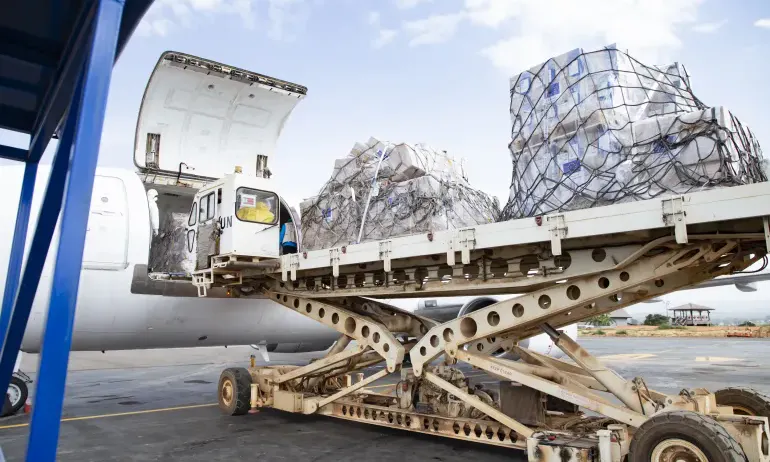
In 2010, UNICEF procured, on behalf of GAVI and governments of developing countries, around 2.53 billion doses of traditional and new vaccines worth $750 million. As the leading vaccine procurement agency in the world, with its supply division based in Copenhagen, UNICEF contributes to the health and security of the global vaccine market.
 
UNICEF’s procurement work is guided by an over-arching vaccine security strategy that entails working with multiple, WHO-prequalified suppliers to discourage monopolies; accurately forecasting multi-year global vaccine needs in order to negotiate favourable prices and ensure an adequate supply of vaccines; and securing the safe and timely delivery of the vaccines to countries.
 
Beyond procurement, UNICEF works with governments to help deliver vaccines to communities via a “cold chain”, train vaccinators, and ensure that care-givers understand the importance of immunization and how to access it. In an effort to improve transparency around vaccine supply, UNICEF recently made public the prices it pays for individual vaccines. As the largest buyer of children’s vaccines, this move is in line with UNICEF’s commitment to ensure that vaccine supply is sustainable and affordable.
 
“A competitive and sustainable market that achieves greater vaccine security is in the best interest of children, especially the poorest and most vulnerable," said Ms. Shanelle Hall, Director, UNICEF’s Supply Division. “We will publish the prices we pay for vaccines once contracts for vaccines have been awarded following a procurement process.  The commitments expressed today by industry help assure us that we can look forward to lower vaccine prices which will enable more and more children to have access to vaccines that could save their lives."

*About the GAVI Alliance
The GAVI Alliance (Global Alliance for Vaccines and Immunisation) is a broad partnership of public and private organizations managed by the GAVI Secretariat - Swiss corporation, and directed by a Board of stakeholders. GAVI's mission is to save children’s lives and protect people’s health by increasing access to immunisation in developing countries. 

What now?
Give the gift of immunization to a child
Read more about UNICEF and vaccine pricing
Read more about the GAVI alliance

0 Comments

Post A Comment

Don't worry, we wont make this public