A Pledge of Protection
Click images to enlarge
Ishmael Beah fought in Sierra Leone's civil war when he was just 13 years old. He was forced to fight, to kill, to take drugs. Now he is UNICEF’s Advocate for Children Affected by War.
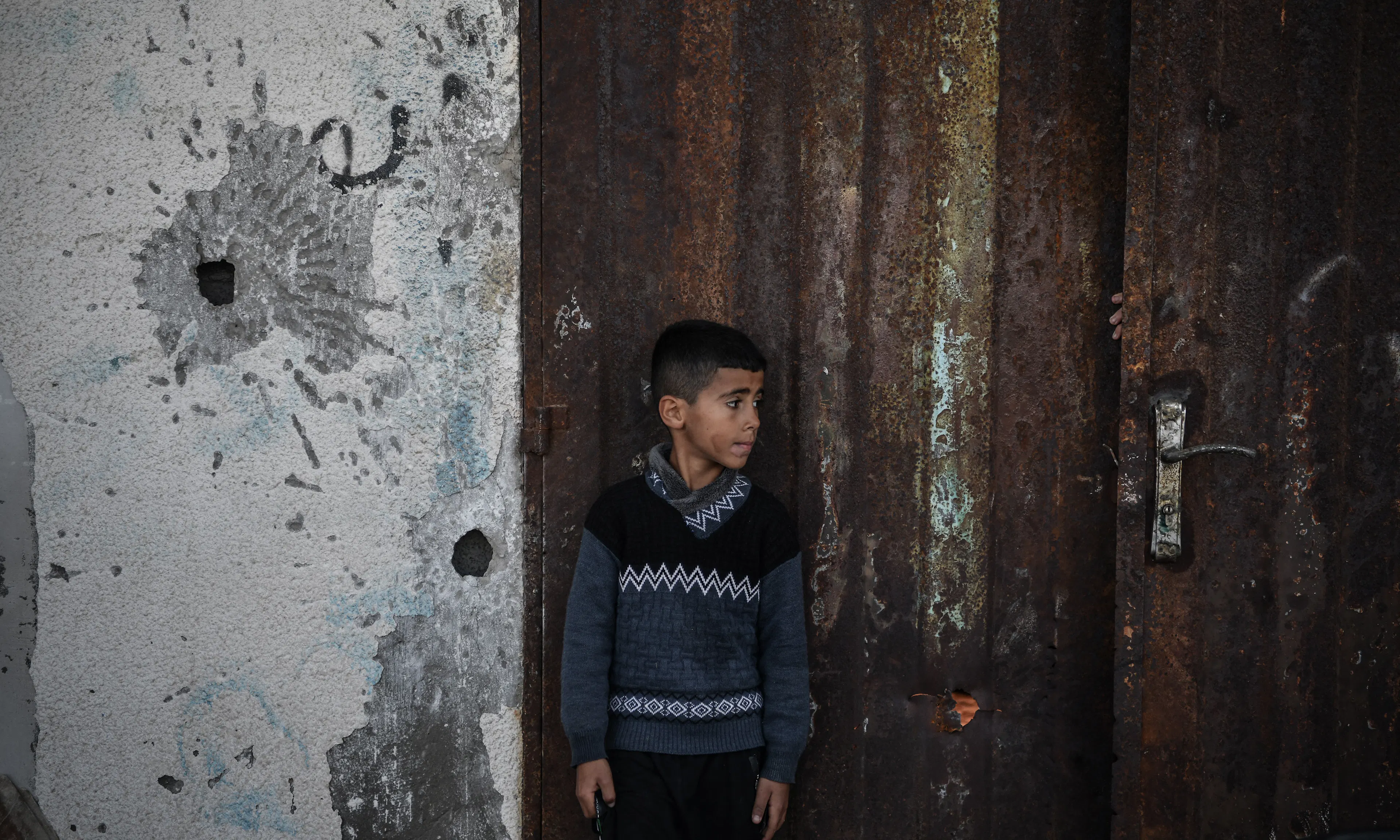
A boy sits against a wall covered with drawings of weapons and military vehicles, in a centre for former child soldiers in Chad. The UNICEF-supported centre provides rehabilitation services, skills training and shelter for former child soldiers until they are reunited with their families or become self-sufficient.
© UNICEF/NYHQ2010-1152/Olivier Asselin Chad, 2010
Emmanuel Jal fought as a child in Sudan’s civil war and is now an internationally acclaimed rap artist.
Zaccheline Dugbe fought in Liberia’s civil war as a young girl. She is now a police officer.
These three young people, who suffered unbelievable pain and exploitation as children, came together to celebrate a declaration to end the use of child soldiers in Africa.
Following an agreement between UNICEF and the government in 2007, Chad demobilized over 800 children from rebel soldier groups. The children have entered rehabilitation centres and receive vocational training to stop them from rejoining the armed groups for economic reasons.
This month, a further positive step towards ending the use of child soldiers was taken: six Central African nations signed a declaration on ending the use of child soldiers. The ‘N’Djaména Declaration’ on child soldiers was signed by Chad, the Central African Republic, Sudan, Nigeria, Niger and Cameroon. It is a pledge to stop the use of children in armed conflict and to strive for the release and reintegration of children.
“A child’s place is with their family, a child’s place is at school,” said Chad’s Minister of Social Action, Ngarbatina Odjimbeye Soukate.
This is a firm step towards giving all children the dignity of a childhood that many have been deprived of by decades of conflict. Together, we can put an end to the suffering of these children who deserve a better childhood.