Immunizing Ghana’s hard-to-reach kids

By UNICEF Ghana

Issah Mahamudu suspected that Ikma, his two-year-old daughter, was sick. Normally, whenever she or her two elder siblings became ill, he would take them to the next village for medical treatment. That is, when the river allowed it.

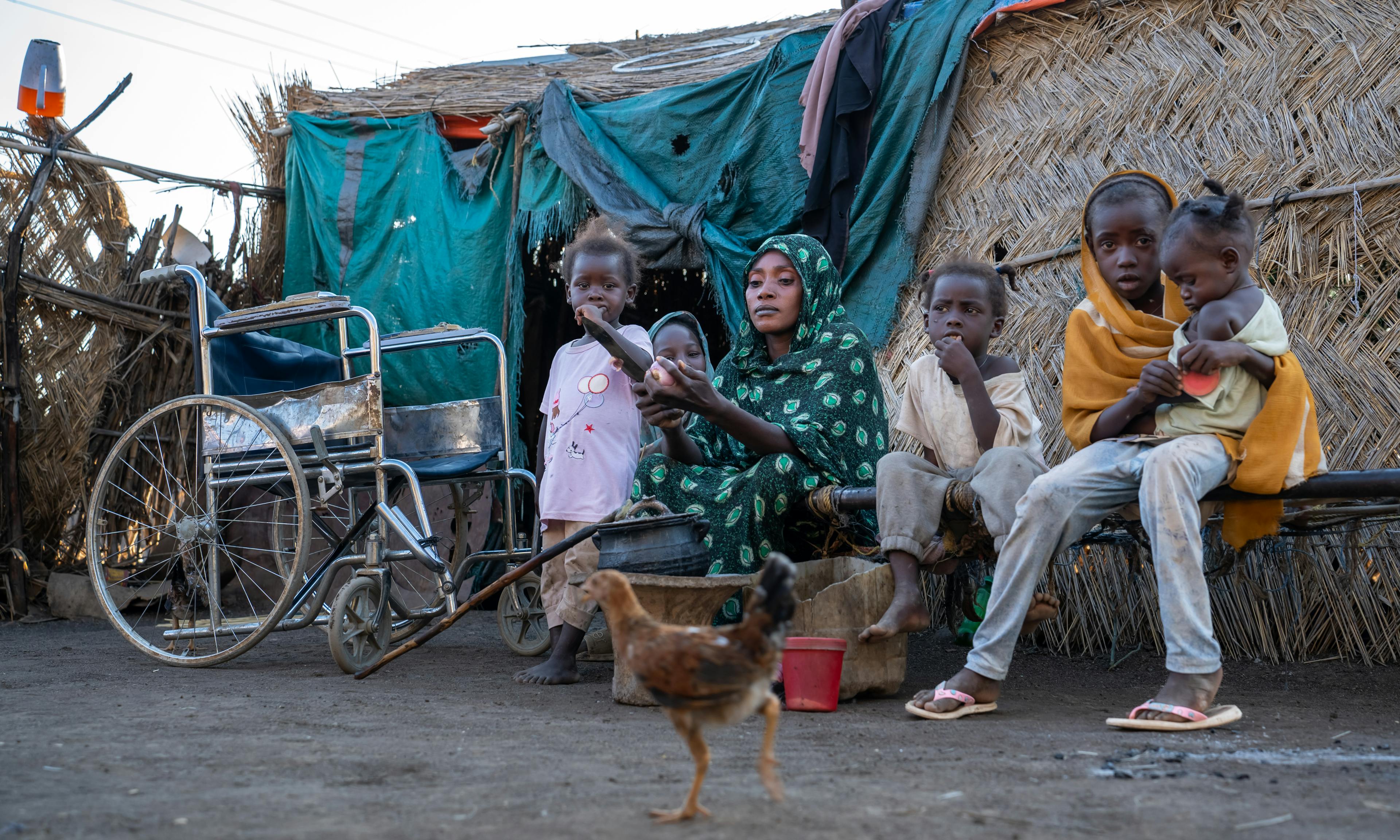
Ikma and her family live in Zantani, a remote village of around 2,000 people, 15 kilometres from the shores of the Volta River, in northern Ghana. The island community has no school or health centre, and most inhabitants eke out a living from farming,
having to make ends meet from just one harvest each year. During the five months of the rainy season, Zantani’s people are effectively cut off from neighbouring communities, where health facilities and schooling are available. That’s because small
canoes cannot navigate the rough and choppy waters of the Volta river, Zantani’s lifeline to the outside world. And few of the villagers can afford motorboats that could make the crossing. Getting from the river to the village takes 20 minutes on a motorbike, much longer on foot.

On that dry season morning, Issah, instead of having to leave home for help, was relieved to find that help was headed his way. A 10-member mobile district health team had just arrived in Zantani, meaning that Ikma would receive the care she needed, as
well as another dose of vaccine to protect her against illnesses like diphtheria, whooping cough, tuberculosis, measles and polio. These preventable diseases kill an estimated 1.7 million children in poor countries every year – children who, for one
reason or another, fall through the immunization net.

“If I hear the health workers are coming to visit our village, I always rush my children there,” said Issah. “This is the only health service we get, and my children need to be immunized. I try to give them a good morning, afternoon and evening meal. But even
then, they need the vaccinations to stay healthy.” Ikma used to get sick much more often before she started her cycle of shots, and so, for that matter, did her sister and brother, according to Issah.

UNICEF works closely with the Ghana Health Service to enable mobile teams to get to remote riverside communities like Zantani and immunize hard-to-reach children. UNICEF provides the equipment the teams need to do their job – motorcycles,
vaccines, vitamin A supplies and antenatal kits. It also helps to set up health worker training courses, without which there would be no trips.

These outreach groups negotiate the tributaries of the Volta river once every two or three months, except at the height of the rainy season. In their wake, they leave happier and healthier families.

The people of Zantani were told about the health mission that same morning. Excited by the news, parents, taking their children, hurried out of their homes and waited, some in the burning sun, others under shady trees, for the experts to arrive.

When they did, they got straight to work, setting up shop in different bamboo-built huts. The service they delivered was integrated, providing vaccinations for children, antenatal care for pregnant mothers, an assessment of trachoma cases, and consultations for minor ailments.

Mothers and fathers, with their young ones in tow, lined up outside the two huts set aside for immunizations. Health cards in hand, they waited, patiently, for their turn. While his wife was at home preparing the family meal, Issah stood in line with Ikma,
three-year-old Kaharu, and Rafatu, four.

Philomena, a community health nurse with the mobile team, vaccinated one child after another, handling the vials and syringes with care, and a steady hand. Attending also to registration, she made out health cards for infants brought in for the first time. Since parents often don’t know exactly when their infants are born, Philomena and her colleagues estimate the age as best they can, and write this down on the card.

“In my work, I always make a point of stressing the importance of following through with the whole immunization cycle, since interrupting it results in less protection against disease,” she said.

The effects of Zantani’s isolation are all too visible, according to Philomena, who was on her second mission to the place. “During the lean (dry) season, there are more cases of malnutrition, one of the major health challenges for Zantani’s children,” she said. That is because, with only one harvest a year (due to the weather conditions), food stocks are quickly exhausted. “Going out with my colleagues to these communities gives me a real sense of being able to help people,” Philomena said. “These outreach services can make a big difference, by providing the children with a big measure of protection through vitamin A supplementation and immunization.”

UNICEF’s support is critical to the success of these outreach missions, which are bringing health services to poor families in isolated areas and ensuring that their children are receiving life-saving immunizations. UNICEF’s mobilization work, in particular, shows how a small investment can have a very substantial effect on a community.

Mothers, community volunteers and community-based surveillance teams, given guidance by UNICEF, are all contributing by passing on vital information about immunization and vitamin A supplementation. Mums who have seen the miracles of
immunization are in a good position to influence their peers and act as community role models. As part of UNICEF’s immunization programme, village volunteers are trained to provide basic health information to families in their neighbourhoods. All of this is translating into many more children being vaccinated, and almost certainly, in lives being saved.

When it was almost dark and the health workers were satisfied they had reached as many children as possible, they rushed back to the river for the trip across. Everyone was dusty and exhausted, but thoroughly content. In one day, each and every one had made a difference in the lives of Zantani’s children, including that of little Ikma.