For all news enquiries please contact Karen on 04 815 9387 or email karen@unicef.org.nz
19th February 2010
By Roshan Khadivi0 Comments
The first day of school in a UN Children’s Fund tent classroom was a happy day for Yolanda Senatus, 9 – and a far cry from the tragic day she had experienced just a month earlier.
“I like to draw, sing and play with my friends. I am so happy today,” says Yolanda, who lost both her home and her school in the devastating earthquake that struck Haiti on 12 January.
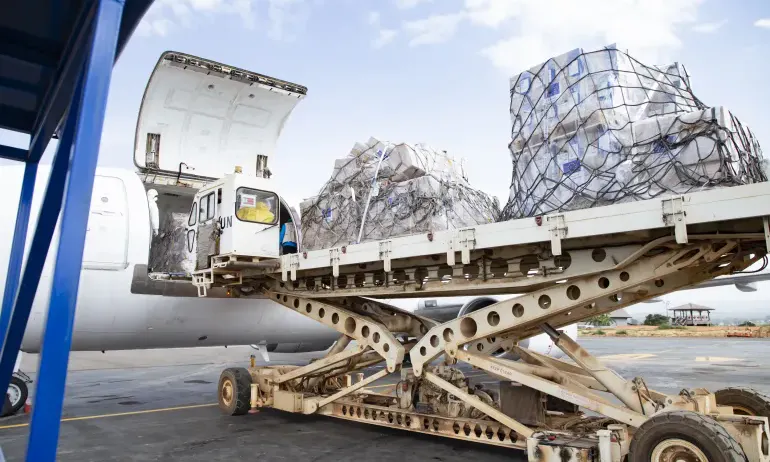
Yolanda is from Mount Jacquot, a hard-to-reach area in the vicinity of Port-au-Prince, the Haitian capital. The community is on top of a mountain that is accessible only by steep roads; at times, it’s even difficult for helicopters to land there. Nevertheless, a UNICEF supply team has delivered tents for the temporary school and a clinic in Mount Jacquot, as well as school kits, medicine and basic medical equipment.
The UNICEF team arrived at the location early one morning last week and helped community members set up the tents. Classes for 300 children began that day.
Two million affected
A full assessment of earthquake damage to Haiti’s education infrastructure has yet to be completed, but an estimated 90 per cent of schools in the Port-au-Prince area – and 40 per cent of schools in the southern port city of Jacmel and other stricken localities – were damaged or destroyed. This could mean that as many as 2 million children are being deprived of their right to education.
Working with the Haitian Ministry of Education, UNICEF is setting up 150 school tents for earthquake-affected children. The goal is to get all children back to school by early April.
“The temporary learning spaces will be used until the schools are rebuilt,” says UNICEF Education Specialist Andrea Berther. “In addition, UNICEF and the ministry are working to identify and quickly train teaching personnel.”
These efforts are critical because education provides children with a sense of safety and normalcy in times of chaos and crisis. Besides tent classrooms, UNICEF has started the distribution of 390 School-in-a-Box kits and 410 recreation kits in 10 rural departments where displaced quake survivors are now living. Each School-in-a-Box kit provides as many as 40 children with exercise books, pens, pencils and other learning materials.
Safe spaces for children
UNICEF is also establishing ‘child friendly’ early-childhood and primary learning centres equipped with education supplies and learning materials, as well as access to safe drinking water and latrines.
“We will do an accelerated learning programme so the students do not lose the school year. This will be challenging in terms of coordination, but everyone is on board,” says Ms. Berther.
Community mobilization
In addition to its support for the Ministry of Education, UNICEF will encourage community mobilization to ensure that parent-teacher associations in affected areas are involved in the management and revitalization of the learning spaces.
The focus on education reflects the fact that the aftermath of the earthquake in Haiti is a children’s emergency. Nearly 40 per cent of all Haitians are below 15 years of age, and recovery must start with children.
Moreover, UNICEF believes the unprecedented international commitment, support and funding seen since the earthquake struck must be used to build back better for all young Haitians. In the education sector, this means getting all children in school in a country where enrolment and attendance were poor even before disaster struck.
Back in Mount Jacquot, Yolanda continued to write and draw in her notebook. Her teacher, Onickel Paul, noted that the opening of the tent school had helped build trust, among the children and their parents, that things are getting better in Haiti.