Feature articles

Zimbabwe: Melissa Goes Back to School

Harare, Zimbabwe, September 2008
Tsitsi Singizi, UNICEF International

Hunger torments six-year-old Melissa Jambo, who lives in Dzivarasekwa, one of Zimbabwe's poorest villages.

"I wanted to go to school, to play with my friends but I could not. I was so weak and always hungry; in the morning, in the afternoon and even when I went to sleep," she says.

A year ago Melissa lost her father. Her mother is critically ill and has moved to their home in a rural area. Melissa now lives with her teenage sister and a distant relative. Together they can barely afford a decent meal and rely on maize paste with salt to try and overcome their hunger. Two months ago, Melissa was so thin she could not walk to school. She weighed 10 kilos, half of what she should and had a body similar to that of a nine-month-old baby.

Melissa is not the only child with this story in Zimbabwe. The number of orphans is increasing due to the AIDS epidemic and these children struggle to find sufficient, balanced diets for themselves and their siblings. Inflation means that people can no longer afford basic necessities. Because of a food shortage, many shops have empty shelves.

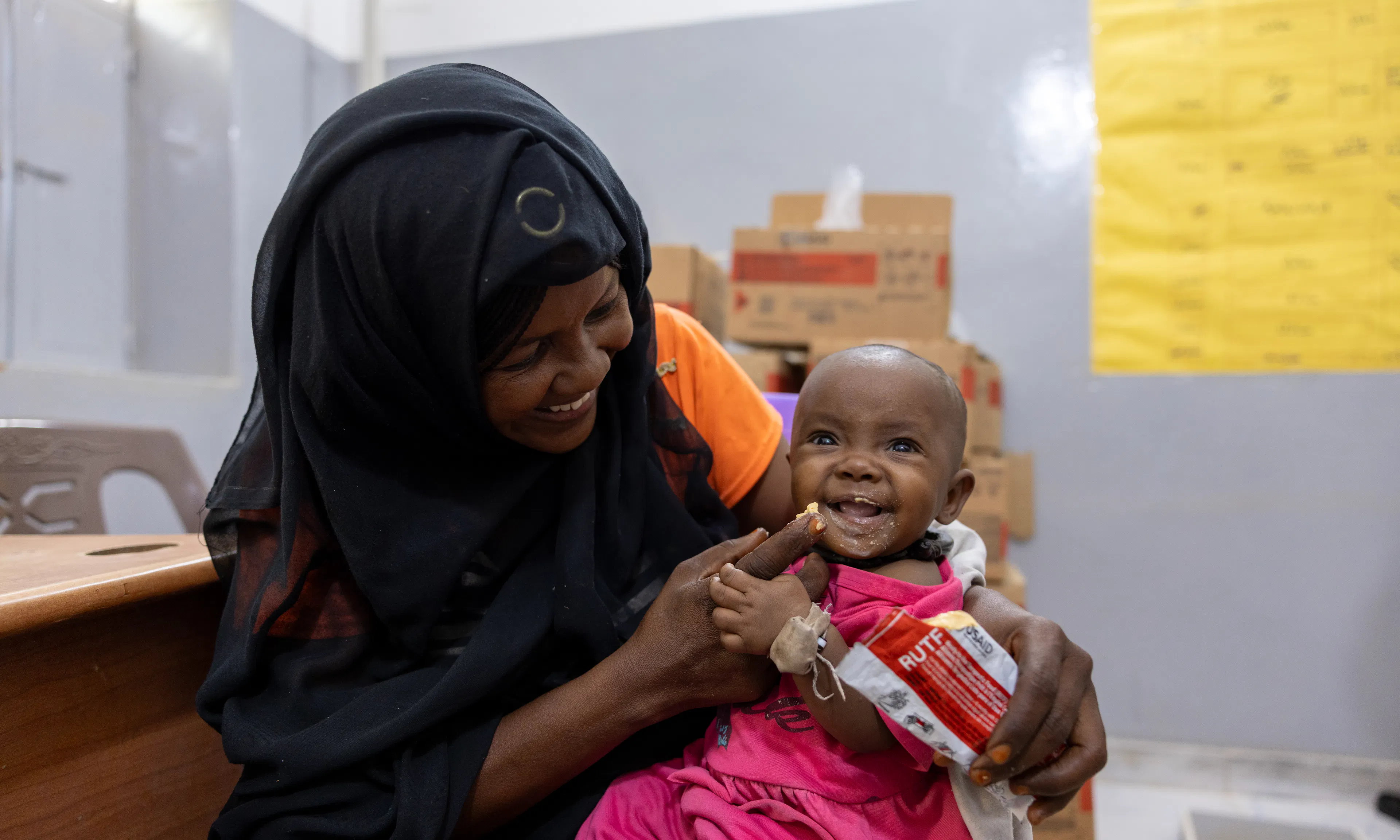
UNICEF supports 60 therapeutic centres for children in Zimbabwe. At one of these centres in Dzivarasekwa, Melissa was identified and treated. She was weighed and had her height and arm circumferences measured. Melissa was then given nutritional support through products like milk, vitamins, calcium and plumpy nut. Apart from feeding patients, these centres also offer daily lessons on nutrition, childcare and hygiene education to parents and caregivers. Since her treatment started, Melissa has gained three kilos and is more cheerful;

"I am now strong and can go back to school."

Liberia: Tackling Malnutrition

Virginia, Liberia, 2009
UNICEF International

Patience is a three-month old baby with big brown eyes set in her sunken face. She is severely malnourished and her clothes hang from her small bony frame as she lies in her mother's arms. Patience is just one child out of seven per cent of children suffering from acute malnutrition in Liberia.

Malnutrition is caused by improper or insufficient diet. Unsafe drinking water, poor sanitation and poor hygiene are also major contributing factors. These can cause children to have persistent diarrhoea so that their bodies are unable to absorb essential nutrients from food. Patience is lucky; not all mothers make the connection between illness and poor sanitation. Some blame spirits or witchcraft when their children get pot bellies or their hair discolours, or their bodies swell. These are actually signs of malnutrition. If her malnutrition is untreated, Patience could become severely brain damaged, muscle deficient or blind.

UNICEF supports a therapeutic feeding centre for children under-five located in Virginia, Montserrado County. The feeding centre has a screening team that goes into communities to identify malnourished children and their families. Patience and her mother were brought to the feeding centre yesterday and Patience immediately received a treatment of folic acid and antibiotics. She was also checked for malaria. To encourage rapid weight gain Patience will receive a protein rich milk formula called 'F100.'

The ward is airy and clean; a simple open dormitory with mosquito nets suspended from the ceiling and mattresses on the floor. A radio plays music and Patience's mother sits with a group of young mothers who nurse their babies and chat to one another.

"We have a big problem with high numbers of teenage mothers in Liberia," says William Dakel, Director of the centre. "They don't know how to take care of their children and most are single. Many of them don't breastfeed. They don't want their breasts to sag, they say, or they feel tied down and want their freedom. We teach them the importance of breastfeeding. Poverty has many faces and education is what these young mothers need. It will take some time but eventually the message will spread."

Three weeks ago Michael Clarke brought in Princess, his eight month old daughter. "She was so small, almost half of the normal weight for a child of her age," he says. "She was very sick and her skin was hard. It was peeling, and she had a running stomach." Today Princess is alert and playful and she will soon be back with her community. Thanks to the kind help of the staff at the centre, Patience now has hope of the same outcome.